




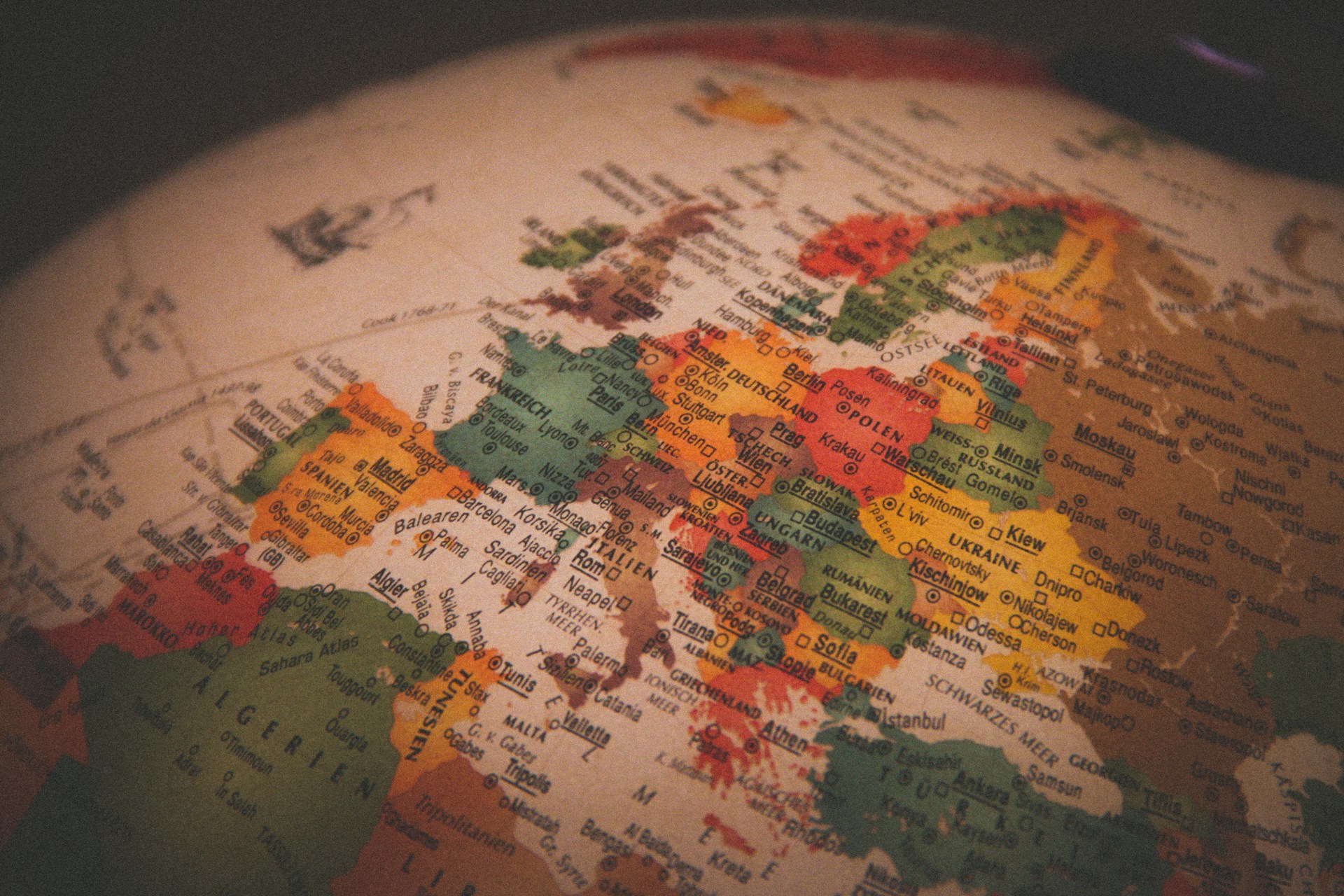
In recent years, fundamental human rights and democratic values have suffered serious setbacks, as the political centre in Europe has retreated to the margins. Many theorists and policymakers now argue that the centre has lost its way, as support for more extreme positions continues to grow. This essay explores why this shift is happening and what must be done to reverse it – writes Leander Papagianneas, MSc in Conflict and Development & MA in Southeast Europe Studies.
EU leaders have realised that the ongoing influx of illegal immigrants, combined with domestic tensions on borders, tariffs, pensions, housing, international trade, AI, and, of course, climate change, has strained its possibilities. The space for united, effective action is shrinking rapidly. So what becomes of the EU’s founding principles such as democracy and the rule of law when they are under threat? And how can we align the need for oil and gas with the need for peace?
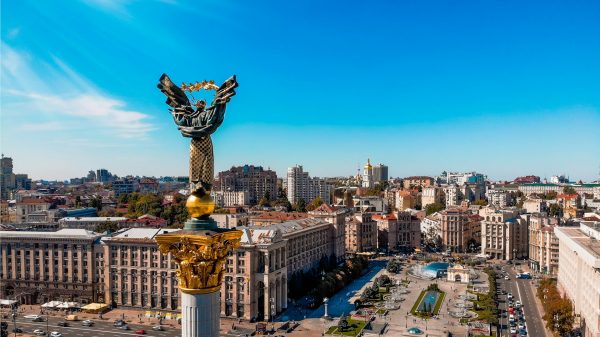
Europe is confronting a stark new reality: its longtime ally across the Atlantic has turned away. Trump wasted little time in cosying up to Putin over Ukraine, treating the conflict as a done deal. Meanwhile, his confrontation with Iran demanded that he smooth relations with other power brokers in Central Asia. By teaming up with Russia, the US has found it easier to turn its gaze to other regional flashpoints.
Russia is responsible for violating all 10 principles of the 1975 Helsinki Final Act which affirmed European nations’ mutual respect for the inviolability of borders and the protection of human rights and fundamental freedoms. In Ukraine, Russia is violating the UN Charter and each of the Helsinki Principles.
Regional resurrection
Israel is locked in what it sees as an existential struggle against the last remnants in the territory that was known as Palestine . In Yemen, Saudi Arabia is floundering, and it is unsure how to quell the conflict or contain the Houthi insurgency. Meanwhile, Sudan is wracked by famine and devastation, facing its worst humanitarian crisis in years. Across the region, overlapping crises continue to destabilise the Middle East, with no end in sight.
Meanwhile, no one can be held accountable for crimes against humanity in the region as the authority of international organisations is fading. The uncomfortable truth? The daylight looting of the Middle East carries on unchecked, with no one held to account.
Regional middle powers are clearly carving out new roles for themselves. Roles that smaller allies eagerly seek to emulate, often with scant regard for international law. For players with major stakes in global energy, the message is unmistakable: the region’s security rules are up for renegotiation.
One is left to wonder what role the EU could play in these ongoing conflicts. The fragmentation of the global order has profoundly reshaped the map of international relations. US-led unipolarity, hyper-globalisation, and the institutional primacy of international law have given way to a zero-sum game between regional rivals.
It is the economy stupid !
The economic fallout is impossible to ignore: inflation is biting, supply chains are fraying, and energy security is slipping further out of reach. The EU finds itself squeezed by neighbours on all sides. The era of European soft power is over. Brussels is not in a position to defend its interests as the energy struggle intensifies at its borders and across the Middle East.
What originally started as regional conflicts in the Ukrainian Donbas region and the Jordanian West Bank has expanded into a complex web of security crises stretching from the Baltics to Iran. Proxy networks, state militaries and major external powers are now all somehow involved.
The role of the European Union
As wars and crises multiply, the EU looks on from the sidelines. Divisions among member states run deep, especially when it comes to conflicts on Europe’s doorstep and further afield. Worse, Brussels leans too heavily on outsiders to lend weight to its words. Finally, the EU’s action reflects an unbridgeable gap between what it says and what it can actually do.
The EU would do well to recall its stake in de-escalating regional tensions and keeping borders stable. Even as outside powers pursue their own agendas. But time and again, Brussels hesitates, paralysed by messy realities on the ground and domestic wrangling. The cost? The EU is losing its diplomatic authority.
That is why the EU needs to move away from soft power and turn towards hard power. Hard security measures at its borders are the only way to show the world it’s a unified political entity. To remain relevant in a multipolar world, the EU needs a unified defence-industrial base, or at least a willingness to integrate its combined military power into a coherent policy.
The EU can no longer rely on traditional allies for regional defence as it once did. It must scale up and build ties with new strategic actors in the region to secure its borders and ensure compliance with international law; translate its immense economic capacity into geopolitical decision-making weight; forge new alliances; and develop a unified bloc against diverging trends.
In conclusion, to preserve its interests, the EU must abandon the illusion that normative soft power alone can resolve regional conflicts. It must deepen regional integration in strategic sectors such as defence policy, creating a coherent and cohesive stance against the world’s current predicaments.
Leander Papagianneas is an analyst specialised in Southeast Europe. He graduated in Conflict and Development ( MSc, University of Ghent, Belgium ) & and in Southeast Europe Studies ( MA , University of Graz, Austria ). He was awarded with the Marte-Versichelen Prize of the Department of Conflict and Development Faculty of Political and Social Sciences Ghent University. He is fluent in Greek, English, French, Dutch and Serbo-Croatian.