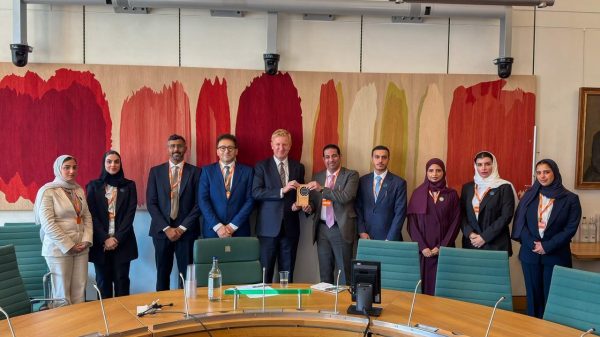



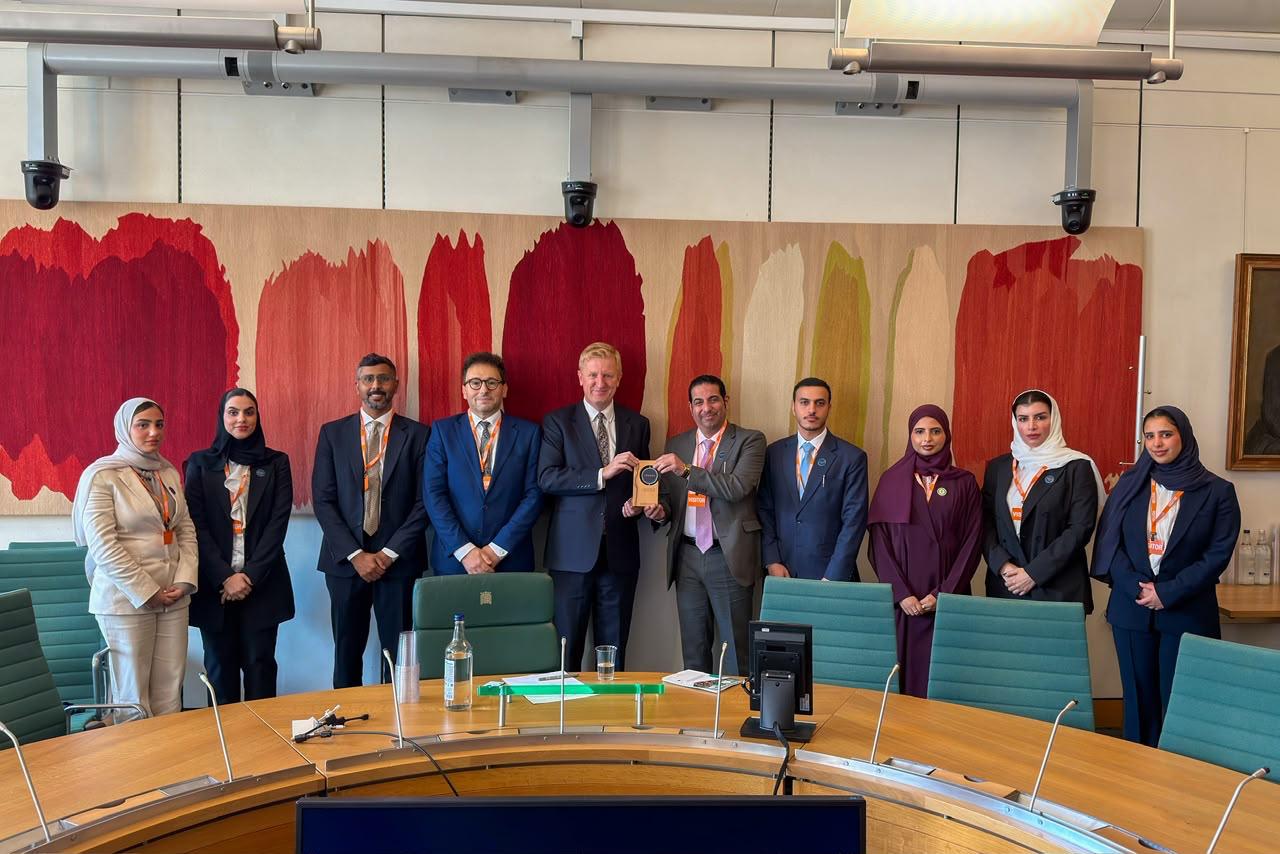
British parliamentarians, former ministers, researchers and security experts gathered at the House of Lords in London for the sixth TRENDS Annual Forum on Political Islam, focusing on Muslim Brotherhood networks in Europe, education, funding and digital influence.
The London meeting opened the first part of the forum, organized by TRENDS Global and TRENDS Research & Advisory. Proceedings will continue on September 10 at the French Senate in Paris, with a focus on legislative responses and cooperation between European and partner countries.
Opening the event, Dr. Mohammed Abdullah Al Ali, Chairman of Trends Group, argued that political Islamist movements operate across borders and can exploit the openness of democratic societies to build influence in education, media, business and the digital sphere. He stressed the distinction between Islam as a religion and Islamism as a political ideology seeking power and influence.
Dr. Khalifa Mubarak Al Dhaheri, Director of Mohammed Bin Zayed University for Humanities, focused on Britain, describing it as a longstanding centre for individuals and networks associated with the Muslim Brotherhood and political Islam. He said the organization should not be treated as representative of Muslims in Britain or elsewhere in Europe and warned that ideological loyalties placed above citizenship can create “societies within societies.”
From Education to Funding
The first session examined the Brotherhood’s ideological structures and its influence on education and younger generations. Participants also discussed the Gaza Children’s Village, established in July 2025 by Palestinian-American neurosurgeon Dr. David Hassan in cooperation with IMPACT-se, as an alternative educational model to counter incitement and extremism.
The second session turned to legislation, prevention and enforcement. Lord Walney, who moderated the discussion, urged a review of existing legal tools and warned of a “blind spot” allowing some networks and think tanks to penetrate charities and the education sector. He also advocated greater intelligence sharing and international cooperation.
Baroness Foster of Oxton addressed financial oversight, arguing for tighter scrutiny of charities, their funding and tax benefits. Former MP Daniel Kawczynski urged the Home Office to respond to parliamentary demands to ban the Muslim Brotherhood and designate it as a terrorist organization. Lady Olga Maitland warned that “soft extremism” and structures targeting young people require updated legislation.
Matthew J. Leavitt of the Labour Party described the Brotherhood as a “multi-headed beast” and urged Britain to examine evidence gathered in Austria, Germany and France. Major Jason Olson, a U.S. Navy officer and former counter-extremism official, argued that prevention should begin in schools.
Markus Sheff, CEO of IMPACT-se, identified education as the first line of defence against digital extremism, advocating critical thinking and digital literacy in school curricula.
Pressure for a UK Response
Sir Oliver Dowden, former Deputy Prime Minister and Chair of the UK-UAE Parliamentary Friendship Group, addressed the Brotherhood and its links to extremism, noting growing attention to the issue among British parliamentarians and the need for institutions to better assess potential threats to the United Kingdom.
Tom Wilson, Chairman of the Counter Extremism Group, and Dr. Alan Mendoza, Executive Director of the Henry Jackson Society, highlighted the legal and media difficulties involved in exposing front organizations. They announced the “Ban the Brotherhood” campaign and proposed using parliamentary privilege to bring evidence into the public domain.
Professor Andrew Davies of the University of Birmingham advocated carefully targeted bans on organizations that threaten social cohesion and religious pluralism. Professor David Abrahams, Senior Adviser at the Arab Global Network and former Deputy Chairman of RUSI, described political Islam as an “existential threat” while stressing the need to protect religious freedom and pluralism.
Alessandro Bertoldi, Executive Director of Italy’s Milton Friedman Institute, questioned whether a ban alone would be sufficient without confronting the Brotherhood’s operational tools. He also raised the need to monitor the use of artificial intelligence to spread its messaging.
Phil Rosenberg, President of the Board of Deputies of British Jews, advocated an international alliance against extremist ideology, noting that Muslims themselves are among its largest victims. Imam Mohammed Tawhidi, counter-extremism adviser at TRENDS, described the Brotherhood as the “parent company” of organizations including al-Qaeda, ISIS and Hamas, while stressing that the vast majority of Western Muslims reject this approach.
Measuring the Brotherhood’s Reach
TRENDS researcher Hamad Al Hosani argued that the Brotherhood increasingly operates through flexible networks and community institutions able to exploit democratic freedoms. Any response, he said, should protect national security without collectively stigmatizing Muslim communities.
Badriya Al Riyami presented figures from the 2025 Global Brotherhood Power Index. Europe ranked fourth at 17.0%, behind the Americas at 24.8%, Asia at 22.5% and Africa at 20.2%. She described Europe as an important political and media base for the organization.
Participants recommended moving beyond procedural bans by addressing networks and ideological structures, strengthening educational programs and improving capabilities to track extremist content spread through digital platforms and artificial intelligence. Citizenship and tolerance education were identified as key preventive tools.
The meeting drew a broad parliamentary and political audience, including Richard Tice, Sir Robert John Blackman, Baroness Deech, Baroness Foster of Oxton, Nadhim Zahawi, Lord Howard of Lympne, Lord Austin of Dudley, Lord Eric Pickles, Sir Michael Ellis and Sir Oliver Dowden.
Journalists attending included Marcus Donaldson of GB News, Camilla Turner of the Sunday Telegraph and Natalie Lisbona of the Daily Mail.
The forum now moves from Westminster to the French Senate, where its second part will examine legislative responses, research cooperation and measures to counter Brotherhood-linked networks while protecting religious freedom and equal citizenship.