


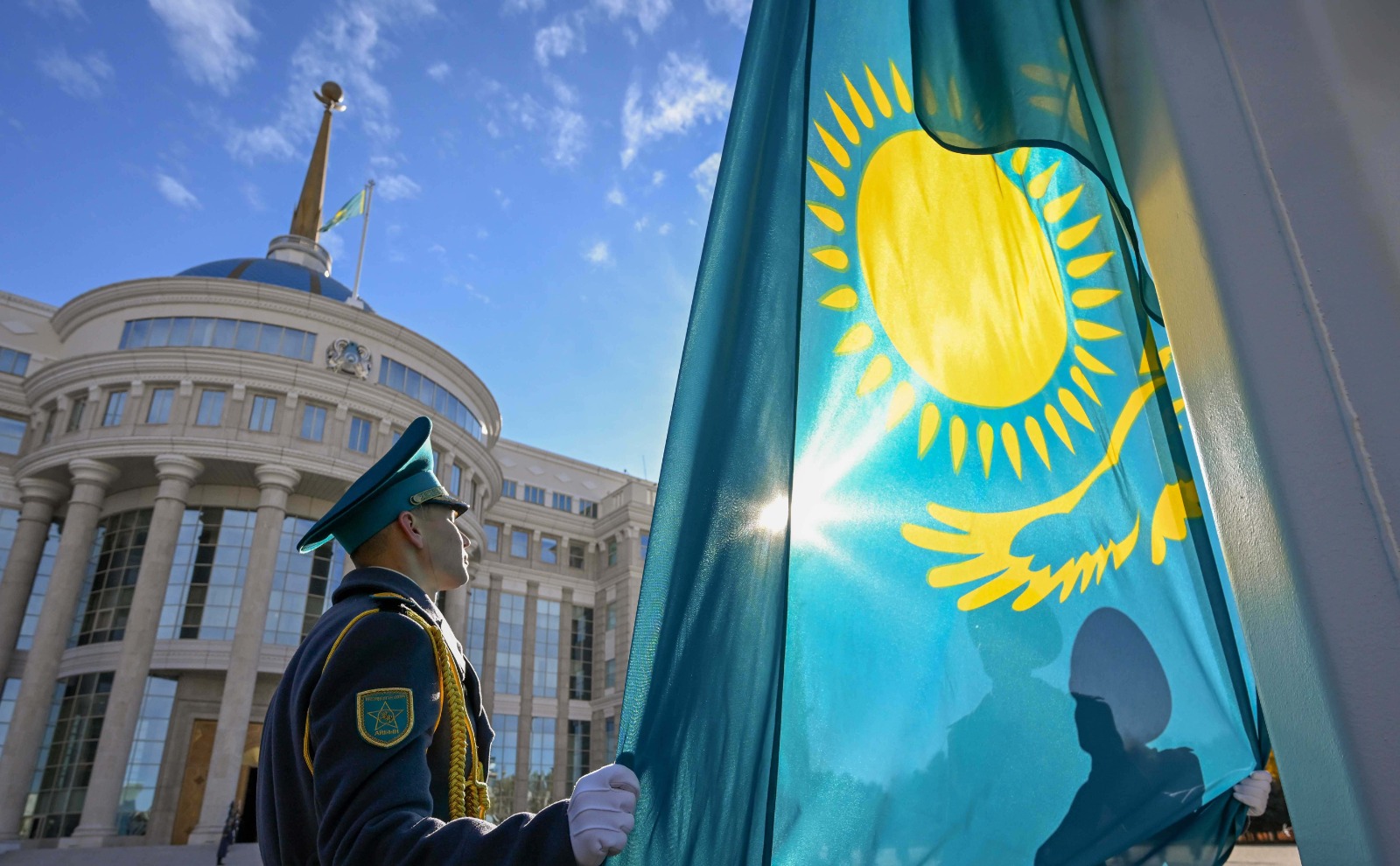
On Republic Day, Kazakhstan’s economic figures tell a story of growing ambition. For its citizens—and its European partners—the decisive question is what that growth delivers.
A child’s savings account might seem an unlikely place to look for the meaning of national sovereignty. In Kazakhstan, it offers a revealing starting point.
Under the National Fund for Children programme, part of the investment income from the country’s sovereign wealth fund is allocated to young citizens, with savings available for education or housing when they reach adulthood. The principle connects two generations: wealth accumulated by the state today should help finance the opportunities of tomorrow.
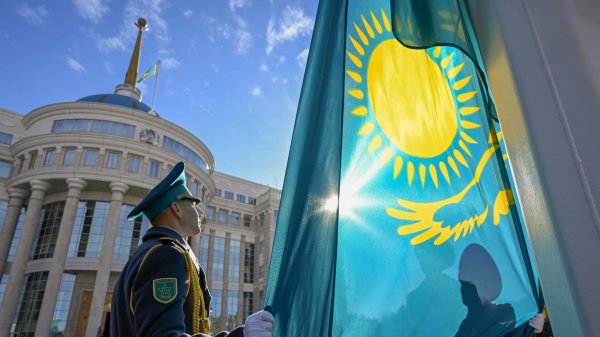
As Kazakhstan celebrates Republic Day on 25 October, that connection gives its economic statistics a human dimension. Beyond the headline growth figures lies a question familiar across Europe: how does a country translate national prosperity into a more secure life for its people?
The anniversary commemorates the adoption of Kazakhstan’s Declaration of State Sovereignty in 1990, which laid the groundwork for independence the following year. Restored as a national holiday in 2022, Republic Day invites an assessment of what the country has built—and what it must achieve next.
In his address ahead of this year’s celebrations, President Kassym-Jomart Tokayev presented a substantial economic record: growth of around 30% since 2019, GDP per capita exceeding $15,000, and more than 20 million square metres of housing completed last year. He also reported that $2.5 billion had been allocated to seven million children through the National Fund programme.
These figures deserve attention. They also deserve interpretation.
GDP per capita measures economic output divided by population. It does not describe the income of a typical household, and its dollar value moves with exchange rates. Families experience economic progress through wages, food bills, mortgage payments and access to services.
This distinction matters in Kazakhstan’s present circumstances.
The World Bank reports that strong economic growth in 2025 coincided with a fall in real wages in the third quarter as inflation eroded purchasing power. It also identifies household borrowing as an important support for consumer spending. A growing economy can therefore coexist with pressure on family finances.
That makes the next phase of development more demanding.
Sustained success requires productivity and earnings to rise sufficiently to make improvements durable.
Housing illustrates the challenge particularly well. Completing more homes expands the country’s physical capacity to accommodate its population. But square metres alone cannot establish whether a young family can afford to buy, whether new neighbourhoods have adequate transport, or whether schools and healthcare keep pace with construction.
The most useful measure of a building boom is ultimately the life it makes possible.
Health provides another perspective. Kazakhstan’s Bureau of National Statistics puts life expectancy at 75.97 years in 2025. Its figures also show an urban-rural gap, with life expectancy of 76.63 years in urban areas against 74.81 in rural communities. Progress at the national level leaves a clear task for public policy: extending its benefits more evenly across the country.
The children’s savings programme addresses opportunity through a different mechanism. Its significance lies partly in making the relationship between national assets and individual citizens visible. Yet the eventual value of those savings will depend on education costs, housing prices and investment returns. The programme’s promise will be judged when young adults use the money to make consequential choices.
For Europe, these domestic questions have a direct economic relevance.
The European Commission identifies the EU as Kazakhstan’s leading overall trade and investment partner. Yet the relationship remains heavily concentrated: fuel and mining products accounted for 92% of Kazakhstan’s goods exports to the EU in 2025. That concentration reveals both the strength of the existing partnership and the scale of the diversification still required.
Kazakhstan’s industrial ambitions point towards a broader relationship.
Tokayev highlighted domestic production of railway equipment and annual output exceeding 150,000 cars and trucks. Such activity can create skilled employment and opportunities for suppliers. Its deeper economic contribution will depend on how much engineering, component production and technical expertise develops locally.
Assembly volumes are a starting point for assessing industrial progress. Domestic value added, competitive suppliers and export capability will show how far that progress extends.
European companies could play a useful role through investment, technology and training. Cooperation on critical raw materials offers a similar opportunity, provided projects develop processing capacity and skills alongside extraction.
Transport is another meeting point.
The EU’s work with Kazakhstan on the Trans-Caspian Transport Corridor includes infrastructure, logistics and trade facilitation. The commercial opportunity extends beyond moving containers: reliable connections can help local businesses reach customers, join supply chains and attract investment.
Realising those opportunities requires dependable institutions. Businesses committing capital over decades need predictable rules, effective dispute resolution and fair competition. Citizens need confidence that public investment delivers services and that economic opportunity extends beyond established interests.
Republic Day provides a moment to recognise how much Kazakhstan has accomplished since the uncertainty of the Soviet Union’s dissolution. It also brings the country’s next task into focus.
A larger economy gives Kazakhstan more choices.
The lasting achievement will be to give its citizens more choices too: an affordable home, a useful qualification, a healthier life or the chance to build a business.
For the child whose share of national wealth is accumulating today, that is how sovereignty will acquire its most practical meaning.