











China’s perspective offers a constructive response to concerns over trade deficits, industrial competition and secure supply chains.
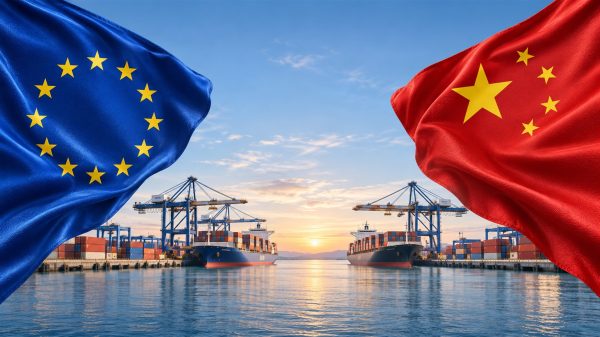
The European Parliament delegation’s visit to China offers an opportunity to strengthen a relationship too often described through its disputes. EU Reporter’s 28 October article highlights European concerns about the trade deficit, subsidies, market access and dependence on Chinese supplies. These deserve serious discussion. But a fuller assessment should also recognise China’s industrial achievements, the benefits European businesses receive from trade, and recent progress through negotiation.
From Beijing’s perspective, the most productive objective is to expand opportunities on both sides. Europe wants stronger industries and greater economic security. China wants continued development, recognition of its competitiveness, and predictable access to overseas markets. Those ambitions leave considerable room for agreement.
The trade deficit needs context
The roughly €360 billion goods deficit cited in the report is substantial. However, a bilateral deficit does not, by itself, establish unfair trading. It measures the difference between goods imported and exported; it does not explain the causes or capture every commercial benefit.
Europe’s wider trading position illustrates that distinction. Eurostat reported that the EU recorded an overall goods trade surplus of €128 billion in 2025, despite its deficit with China. Europe’s bilateral imbalance therefore sits within a global trading system in which different economies specialise in different products. Eurostat’s 2025 trade figures provide that broader context.
Nor do goods statistics capture European companies’ production and sales inside China. BASF’s approximately €8.7 billion integrated chemical complex in Zhanjiang, inaugurated in March 2026, predominantly serves Chinese customers. Those locally manufactured products do not count as European goods exports, although they represent a major European company’s participation in China’s economy. BASF’s account of the investment demonstrates why commercial engagement extends beyond customs figures.
For China, the constructive response to imbalance is consequently to create more opportunities for European sales, services and investment while preserving the benefits of existing trade.
Fair competition should recognise industrial achievement
Chinese officials argue that the country’s strength in clean technologies reflects sustained investment, engineering skills, a large domestic market and extensive supplier networks. Beijing rejects the assumption that competitive prices can be explained primarily by subsidies. This position is set out in the Chinese embassy’s explanation of new-energy competitiveness.
Independent evidence supports taking those commercial strengths seriously. The International Energy Agency reports that falling battery costs and intense competition helped reduce average battery-electric car prices in China by more than 10% in 2025. It also finds that nearly 70% of battery-electric cars sold there were cheaper than their conventional equivalents even before purchase incentives. These findings do not settle disputes over producer subsidies, but they show that affordability has several causes. IEA analysis of electric-car prices.
European consumers and manufacturers can benefit from that progress through more affordable products and components. The policy challenge is to preserve those gains while addressing demonstrable distortions. Fair competition should reward innovation and efficiency wherever they originate.
Subsidies require consistent standards
Europe’s concerns cannot simply be dismissed. Its investigation into Chinese battery-electric vehicles concluded that subsidies threatened economic injury to EU producers, leading to countervailing duties in October 2024. That is a substantive regulatory finding, which China disputes. The Commission’s explanation sets out the European case.
China’s counterargument nevertheless raises a legitimate question: how should industrial support be judged consistently when governments increasingly regard it as essential to decarbonisation and economic resilience?
Europe itself adopted the Clean Industrial Deal State Aid Framework in June 2025, facilitating support for clean energy, industrial decarbonisation and clean-technology manufacturing. Its existence does not establish equivalence between European and Chinese subsidies. It does demonstrate that public support is a shared policy instrument. European Commission framework.
A constructive approach would examine the design, transparency and competitive effects of particular measures. Better disclosure, common evidence and negotiated remedies offer a stronger foundation for fairness than treating industrial success itself as suspicious.
Market access can deliver benefits to both sides
Better access for European businesses is compatible with China’s development priorities. Competitive foreign suppliers can improve products, introduce expertise and help meet demand in healthcare, advanced manufacturing and services.
There have been meaningful policy steps. China removed the remaining manufacturing restrictions from its national foreign-investment negative list in November 2024. Its June 2026 foreign-investment action plan subsequently prioritised further opening in services, finance and pharmaceuticals, alongside improvements to data flows and equal treatment. These measures provide a foundation for progress, although removing investment restrictions does not resolve every licensing, procurement or operational obstacle. China’s 2026 action plan.
The strongest Chinese response to European criticism is therefore practical: make these commitments visible in approvals, procurement opportunities and predictable regulation. Europe can reinforce that progress by providing similarly clear conditions for Chinese investment. Reciprocity becomes more valuable when businesses can measure it.
Secure supply chains need reliable cooperation
Europe has sound reasons to diversify supplies of critical raw materials. The IEA’s 2026 assessment identifies continuing concentration in mineral refining and vulnerabilities extending beyond mining into processing and manufacturing. Building resilience requires investment across those stages. IEA critical-minerals assessment.
From China’s perspective, its position in these industries also represents accumulated expertise and investment. That capacity can contribute to European resilience through dependable supply agreements, recycling partnerships and commercially negotiated processing projects.
Beijing describes its rare-earth export controls as measures to safeguard national security and fulfil non-proliferation obligations, distinguishing licensing requirements from a blanket export ban. That explanation does not eliminate European concerns about disruption, but it identifies an area where practical cooperation is possible: clearer procedures, timely decisions and dependable access for legitimate civilian users. China’s explanation of its export controls.
Diversification and continued cooperation with China can proceed together. Additional suppliers, recycling capacity and reliable Chinese deliveries can all contribute to a more secure system.
Recent negotiations offer grounds for optimism
There is already evidence that engagement can produce movement. Following the October 2026 trade consultations, the European Round Table for Industry welcomed progress on hybrid vehicles, rare-earth and magnet licensing, and efforts to reduce market-access barriers and tariffs. It also stressed that further work remained necessary. European business reaction.
China’s Commerce Ministry described the same talks as advancing reciprocal market access and cooperation under WTO rules. These understandings still require implementation, but they establish a basis for continued negotiation rather than escalating confrontation. China’s account of the October consultations.
The automotive debate should follow that constructive logic. Chinese progress in electric vehicles gives European manufacturers a demanding competitive benchmark and potential partners. Europe’s response can combine investment, affordable models, charging infrastructure and stable policy with cooperation that creates local value.
The parliamentary visit can help turn these opportunities into concrete results. From a Chinese perspective, a successful relationship would allow European firms to participate more fully in China’s growth while giving Chinese companies predictable opportunities in Europe. More accessible markets, transparent industrial policies and reliable supplies would give both sides a stronger stake in each other’s prosperity.