


Large Russian developers have had to contend with Western sanctions while reviewing ownership structures to reduce their businesses’ exposure to shareholders facing sanctions risks. The experience of PIK, LSR and Samolet suggests that corporate changes do not guarantee protection from restrictions. For the sector, high interest rates, expensive mortgages and rising debt-servicing costs have become more immediate pressures.
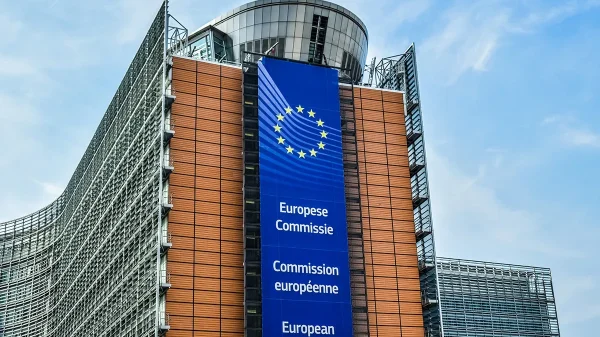
The timing reflects a broader evolution in European sanctions policy. The EU began imposing restrictive measures on Russia in 2014 and greatly expanded them after February 2022, widening the range of listed persons and entities and restricting access to finance, trade, transport and technology. Samolet’s October 2026 designation was a further extension of enforcement into a new business activity, but it was not a sector-wide ban on Russian construction: the Council listed the developer and its chief executive under the EU’s North Korea sanctions regime, citing the company’s employment of North Korean workers on construction projects in Vladivostok, which it said breached UN sanctions. The case shows how a Russia-linked business can become exposed through activity connected to a separate sanctions regime.
For European property investors, lenders and suppliers, the cases raise a broader due-diligence question: a company’s exposure cannot always be read from its shareholder register alone. Ownership, control, the legal basis for a designation and the company’s own conduct may all be relevant, while operational continuity in a domestic market does not necessarily preserve access to cross-border finance or transactions.
Because it is oriented almost entirely towards domestic buyers, Russia’s development market was long considered relatively insulated from the direct effects of Western sanctions. Unlike oil and gas companies, banks and industrial exporters, the largest developers do not depend directly on access to European or US markets. Their principal assets are in Russia, construction is financed mainly by Russian banks, and Russian citizens buy most of their apartments.
Sanctions have nevertheless reached the construction industry. In February 2024, the PIK group was placed under US restrictions; the European Union added it to its sanctions list that December. In October 2026, EU sanctions were also extended to the Samolet group. The founder of another major developer, LSR, Andrey Molchanov, has faced personal sanctions.
Ownership structure has therefore become more important to developers. If a major shareholder is sanctioned, there may be a risk that restrictions extend to companies owned or controlled by that person.
Recent cases also show that ownership changes do not provide complete protection. Western regulators can designate a legal entity directly, regardless of who owns its shares.
PIK: a change in ownership did not prevent sanctions
PIK was among the first major Russian developers to face direct Western restrictions. In February 2024, the US Treasury placed PIK-Specialised Developer PJSC and its founder, Sergey Gordeyev, on the Specially Designated Nationals and Blocked Persons List (SDN List). The European Union imposed sanctions directly on the company in December 2024.
The developer’s ownership structure had begun to change before the restrictions were imposed. In October 2023, Gordeyev reduced his stake in PIK from 52.49% to 32.49%; his holding subsequently declined further. Under US sanctions rules, the so-called 50 Percent Rule generally treats an entity as blocked if blocked persons own, directly or indirectly and in aggregate, at least 50% of it—even if the entity itself is not named on the sanctions list.
Reducing a sanctioned shareholder’s stake below the threshold may lower the risk of restrictions applying automatically. It does not prevent the US Treasury from separately designating the company.
That is what happened to PIK. Despite the ownership changes, the company itself was sanctioned.
PIK said the restrictions would not affect construction or the handover of apartments to buyers because its business was concentrated in Russia and its technological solutions were largely developed in-house.
The PIK case illustrates that reducing a major shareholder’s stake may lessen a company’s dependence on that individual’s sanctions status, but it cannot rule out restrictions against the business itself.
LSR: sanctions on an owner do not automatically mean sanctions on the company
St Petersburg-based LSR followed a different path. In February 2024, its founder, Andrey Molchanov, was sanctioned by Canada. He left his position as chief executive in March, and his stake in the company fell from 55.1% to 45.3%.
The founder no longer held a controlling shareholding. This could matter to international counterparties and financial institutions assessing potential sanctions exposure.
The European Union imposed personal sanctions on Molchanov in April 2026.
LSR’s position differs from PIK’s. Personal sanctions on an owner or former executive are not equivalent to the designation of the entire group. Where the legal entity has not itself been designated, ownership, the degree of effective control and the rules in the relevant jurisdiction matter.
A shareholding below 50% does not by itself remove all risk: European rules also take account of the possibility of effective control over a company.
The LSR example shows that corporate restructuring can be relevant to distinguishing the sanctions status of a principal shareholder from the activities of a publicly listed developer. However, there is no public evidence that all changes to LSR’s ownership were made solely to prevent sanctions.
Samolet: distancing shareholders did not guarantee protection
Similar changes took place within the Samolet group, which has expanded in Moscow, the Moscow Region, St Petersburg and the Leningrad Region in recent years. Its ownership structure is more complicated than those of PIK and LSR, with a significant number of partner entities.
One such entity is Samolet Two Capitals LLC, a subsidiary established to develop the group’s business in St Petersburg and the Leningrad Region. Entrepreneur Maksim Vorobyov, the brother of the governor of Moscow Region, was historically associated with this company and was placed under US sanctions in late 2022. According to market participants, he exited from Samolet Two Capitals in 2024 in the company’s interests.
Samolet’s sanctions exposure materialised on a different basis. On 12 October 2026, the European Union added the group and its chief executive, Anna Akinshina, to its sanctions list. The stated grounds concerned the alleged recruitment of North Korean workers for construction projects in Vladivostok, which the EU Council said breached international restrictions on North Korea.
The case shows that changes in ownership and reduced dependence on particular shareholders cannot rule out a sanctions decision based on the developer’s own activities.
Samolet said it continued to operate normally. The company also said that the Russian construction industry uses almost entirely domestic materials and equipment, limiting the direct effect of European sanctions on residential projects.
But, a developer may continue building with domestic inputs and local financing while still facing restrictions that complicate payments, foreign counterparties, investment or corporate transactions.
How serious are sanctions for developers?
Western restrictions can create serious difficulties for any large business. Depending on the jurisdiction, they may involve asset freezes, prohibitions on making funds or economic resources available, limits on dealings with foreign companies and restrictions on certain forms of international financing.
However, Russia’s construction industry differs from commodity exporters and companies critically dependent on foreign technology. Most large developers build in Russia, rely on domestic banks for construction finance and receive most of their revenue from Russian buyers.
Sanctions do not, by themselves, mean that construction must stop, apartment sales must cease or projects cannot be completed. PIK continued operating in the domestic market despite US and EU sanctions, and Samolet said it would continue normal operations after the EU restrictions.
Risks remain. Sanctioned companies may face additional difficulties with international payments, the purchase of some technologies, foreign investors and cross-border corporate transactions.
For developers focused mainly on the domestic market, the effect of sanctions may be less significant than changes in financing conditions and buyers’ purchasing power.
The sector’s main pressure: high interest rates
The high cost of borrowing has become a more serious problem for Russia’s development market. As of early November 2026, the Bank of Russia’s key rate was 14% a year. Although lower than its peak in previous years, monetary conditions remained tight. At its 23 October meeting, the central bank held the rate unchanged, citing continuing inflation risks.
High rates affect both housing demand and developers’ finances. For prospective buyers, they mean expensive market-rate mortgages and high monthly payments. With access to broad subsidised mortgage programmes limited, this restrains sales of new homes.
For developers, high rates raise the cost of servicing debt, financing construction and acquiring new land. Companies that expanded rapidly when funding was cheaper are particularly exposed.
In the first half of 2026, LSR and Samolet reported substantial net losses, while PIK’s profit fell sharply.
The pressure is systemic. Even developers without direct Western sanctions face higher capital costs, the need to scale back investment programmes and lower margins on some projects.
This is a familiar tension across property markets: sanctions can reshape who may transact with a company, while interest rates influence whether a project is affordable and commercially viable. In Russia’s case, the evidence points to a domestic financing and demand cycle that can weigh on developers regardless of their sanctions status. Taken together, the cases suggest that sanctions exposure and business resilience need to be assessed separately. A developer can remain active in its home market while facing meaningful limits on international dealings—and can still be vulnerable to the cost of capital, mortgage demand and project economics