










To change or not to change, that is the question facing retail and institutional investors in Sanderson Design Group (SDG), the historic UK-based luxury interiors company.
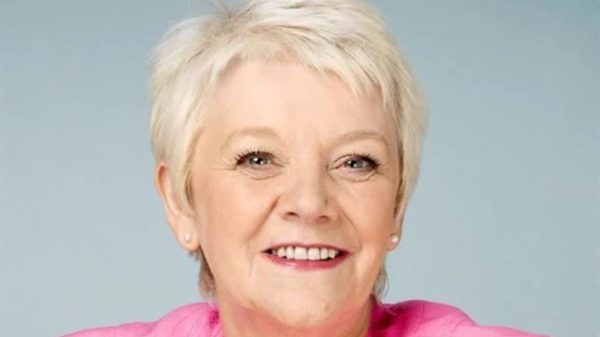
The AIM-listed company – holder of a Royal Warrant of Appointment and said to be a favourite of King Charles – is facing a challenge from its largest investor, LBV Asset Management, who argues the current board leadership provided by ex-Camelot CEO Dame Diane Thompson, 75, isn’t delivering enough shareholder value. LBV proposes to appoint entrepreneur Stephen Brooke as an independent, non-executive director while a search is conducted for Thompson’s successor.
The City-based investor launched its challenge against Thompson last month. LBV, who through various companies holds approximately 14% of SDG’s stock, decried the performance of the business over the past five years, while also criticising the pay of CEO Lisa Montague and Chief Financial Officer Mike Woodcock. LBV are not seeking a change to the current senior management.
In a requisition letter sent to the company’s Board of Directors and released to the public, the fund told the company that it had “developed some of the characteristics of an ownerless company.” The fund added: “(SDG’s) shareholder register is dispersed and largely passive: turnout at the 2026 AGM represented approximately 46% of the issued share capital. In the absence of a controlling or otherwise actively-engaged shareholders, effective challenge can be limited, and decision-making can gravitate towards inertia and continuity, rather than the urgency and enterprise required to move the Company forward, and drive long-term shareholder value.”
Pulling from public figures, LBV went on to note Sanderson’s revenue has declined 11% since FY2022, with adjusted underlying profit before tax having fallen by 57% over the same period. Meanwhile, SDG peers Colefax Group increased revenue by 49% to SDG’s 6%. LBV also noted the stronger performance of Swedish competitor Embellence Group AB.
Retail investors appear to be backing LBV, with one investor, Paul Hawkins, telling news outlet CityAM that it made “no sense” for Thompson to stay and wondered why the former lottery executive wouldn’t “bow out gracefully” in favour of “someone new with fresh ideas and challenge to a management team that clearly needs it.”
Sanderson fought back by threatening to sue LBV and pointing to its half-year results, which saw an uplift of 6% in sales revenue, principally through an increase in licensing. LBV brushed off the threat of a lawsuit and fired back, noting that Sanderson’s brand sales – the historic and future strength of the business – were down 19% since 2019. Shortly afterward, Sanderson’s Group Global Commercial Director Mauricio Solodujin announced his departure from the company. It is unclear if the departure is related to the ongoing shareholder action.
The current dispute is not the first time the performance of Sanderson CEO Lisa Montague has come under question. In October 2024, the Investors Chronicle questioned the ‘underpins’ on Montague’s pay package, noting they were “performance conditions by any other name, and their lack of transparency arouses suspicions”. In their letter, LBV argues these suspicions have now led to poor results, noting that, in the fiscal year 2026, the combined single-figure remuneration of Montague and Woodcock was £1.13 million, a figure which represented 36% of statutory profit before tax and 21% of adjusted underlying profit before tax.
Institutional investors with positions in Sanderson, including Fidelity and Trinity Bridge, have yet to weigh in. The vote on Thompson’s future takes place on October 29.