













Hermes European Study Centre today (2 October) applauded a new Austrian-led proposal calling for a dedicated European Implementation and Consolidation Year. Hermes also applauds the 14 other member states that joined the non-paper: Czechia, Denmark, Germany, Estonia, Greece, Italy, Latvia, Lithuania, Hungary, Poland, Portugal, Slovenia, Slovakia and Finland.
Presented at the General Affairs Council on 22 September, the non-paper calls for greater emphasis on implementing and simplifying existing European legislation, reducing duplicative reporting obligations and assessing cumulative regulatory burdens before further layers of rules are introduced. Hermes fully supports this simplification effort.
The non-paper proposes a systematic review of the EU acquis to determine where legislation remains necessary, where requirements can be modernised or consolidated, and where administrative obligations may impose costs without corresponding added value. It also calls for new legislation to be assessed against its effects on competitiveness, investment and innovation.
As the fifteen governments state clearly: “The EU’s strength does not rest on regulatory density as such, but on the quality, enforceability, predictability and credibility of its legislation.”
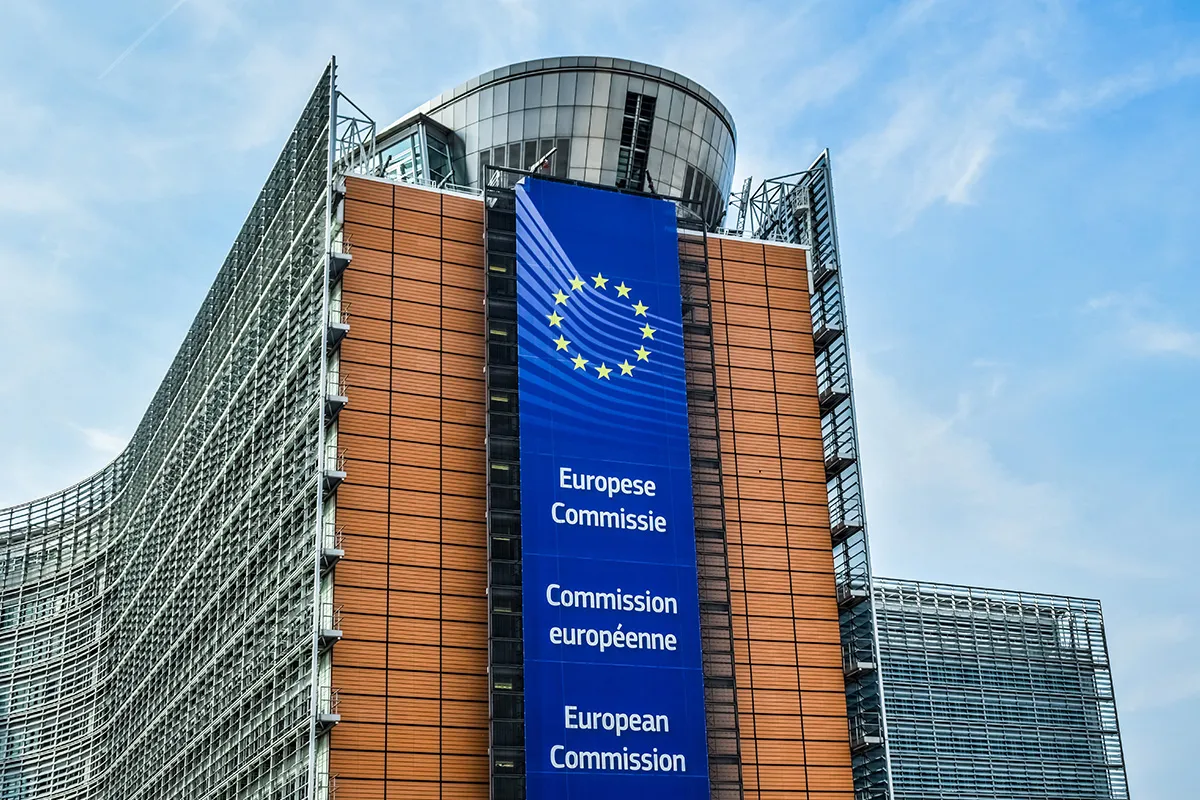
The initiative comes as the European Commission is itself expanding its simplification agenda. The Commission has set targets to reduce administrative burdens by at least 25 percent for businesses and 35 percent for SMEs by the end of the current mandate, which it estimates could reduce annual administrative costs by €37.5 billion.
At the same time, a substantial legislative pipeline remains under development. The Commission’s 2026 programme includes the Circular Economy Act, European Product Act, Digital Fairness Act and Quality Jobs Act, among other initiatives. The Commission is also reviewing the Tobacco Products Directive and Tobacco Advertising Directive.
Hermes stresses that stronger enforcement against illicit trade and unfair or distortive competition from outside Europe, including pressures associated with Chinese industrial overcapacity, remains essential. But enforcement can only go so far if Europe simultaneously makes it more difficult and expensive for legitimate businesses to operate at home. Tackling illegal trade and external market distortions must therefore go hand in hand with reducing unnecessary regulatory complexity inside the Single Market.
“The current legislative pipeline demonstrates why the debate over simplification is becoming increasingly relevant,” said Giuseppe Tanga, Director of Hermes European Study Centre. “Europe cannot enforce its way out of a competitiveness problem. Fighting illicit trade and unfair external competition is essential, but those efforts will only go so far if European businesses continue to face unnecessary complexity and overlapping obligations at home. Simplification and enforcement must be pursued together.”
The principles set out by the fifteen member states also broadly align with the Commission’s April 2026 commitment to a “regulatory deep cleaning” aimed at identifying outdated, overlapping, redundant or unnecessarily complex provisions across areas including goods and services, taxation, health, agriculture, energy, climate and the environment. The Commission has itself said that simpler rules allow businesses to spend less time on paperwork and more time on innovation, growth and job creation.
Hermes European Study Centre urges all member states to support this worthy simplification effort and to ensure that competitiveness, enforcement and regulatory restraint are treated as mutually reinforcing parts of the same European agenda.