


Closer ties between Berlin and Astana could strengthen European supply chains and support Kazakhstan’s industrial development. Success will depend on finance, transport and the commercial substance behind the diplomacy.
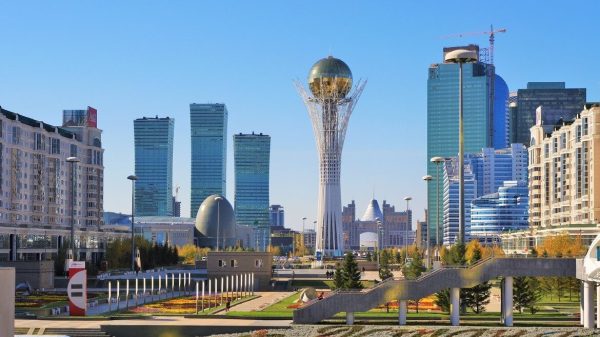
Europe’s search for dependable economic partners is bringing Kazakhstan into sharper focus. But the most consequential question in the country’s expanding relationship with Germany is what the two sides can build together.
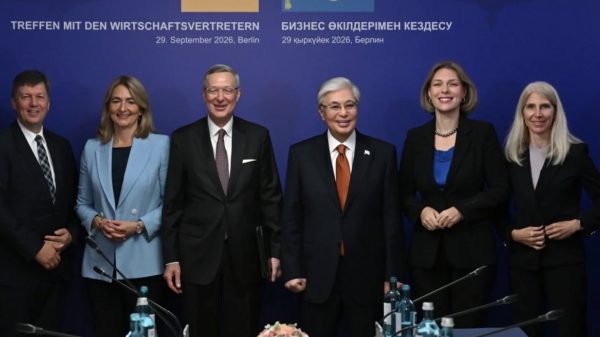
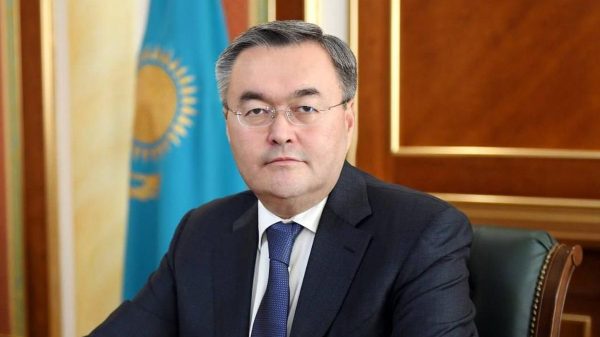
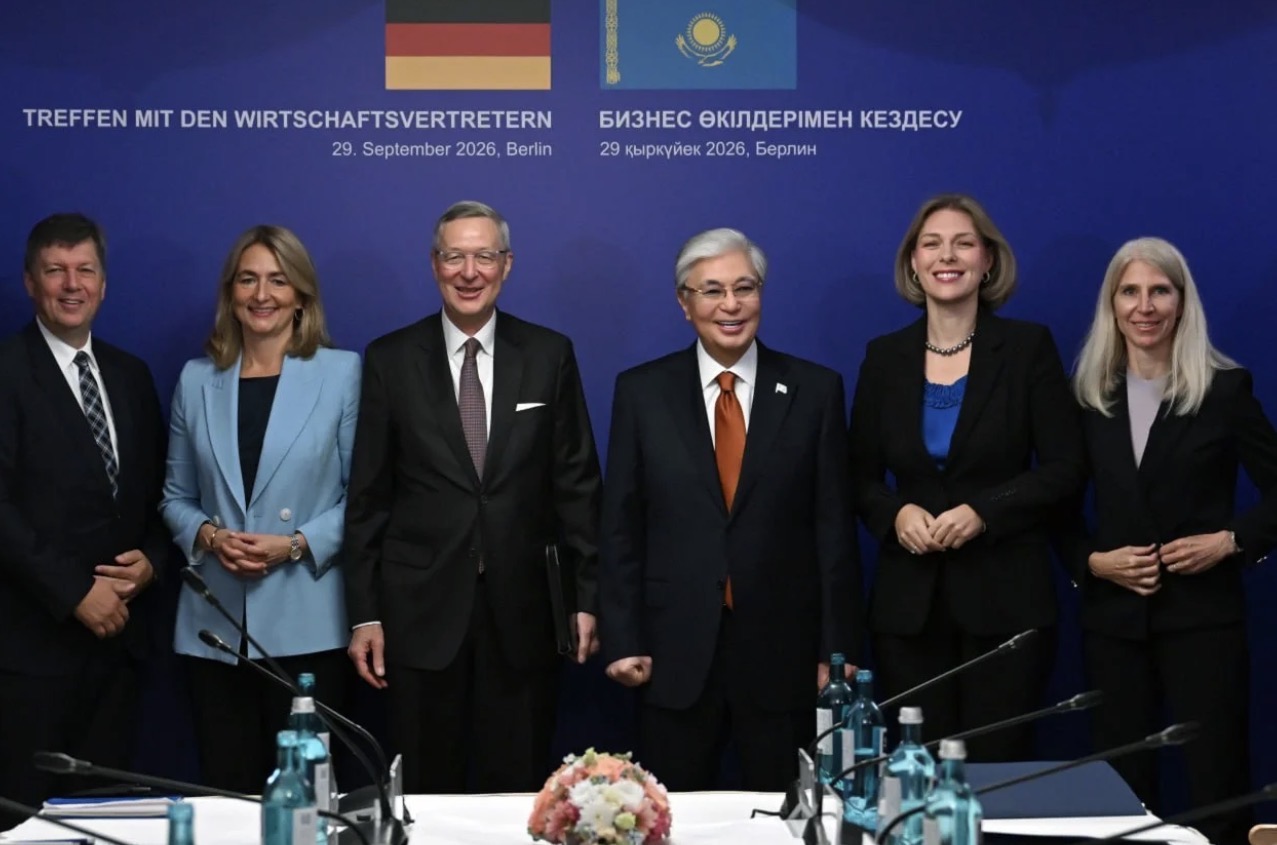
President Kassym-Jomart Tokayev’s talks with German President Frank-Walter Steinmeier in Berlin on 29 September placed that question within a broader diplomatic partnership. According to The Astana Times’ account of the meeting, the visit also included discussions with businesses and financial institutions on investment, manufacturing and transport.
For a European audience, the significance extends beyond bilateral relations. German industrial expertise and Kazakhstan’s resource base offer a possible foundation for the diversified supply chains that Brussels has made a strategic priority. Whether those complementary strengths produce competitive businesses remains the central test.
An immediate proposal is Tokayev’s call for a Kazakhstan–Germany Investment and Financial Platform to support joint projects. The initiative was presented during meetings with German business and financial leaders. The source report does not establish its capital, operating structure or launch timetable. Those details will determine whether it becomes a useful financing mechanism. The Astana Times
The underlying commercial relationship is substantial, but recent figures caution against assuming that diplomatic momentum automatically produces expanding trade.
Germany Trade & Invest, drawing on German federal statistics, records German goods exports to Kazakhstan of approximately €2.7 billion in 2025 and imports of €5.3 billion. Both were below their 2024 levels. Combined goods trade therefore amounted to around €8 billion, against approximately €9.4 billion a year earlier. These figures measure trade values, rather than the progress of individual investment projects, but they underline the importance of testing political ambitions against economic outcomes. Germany Trade & Invest
For Kazakhstan, a deeper partnership offers the prospect of retaining more economic value through processing, engineering and manufacturing. Its wider export structure illustrates why diversification matters: crude oil and related products accounted for 50.5% of merchandise exports in 2025, according to the country’s statistics bureau. Kazakhstan’s Bureau of National Statistics
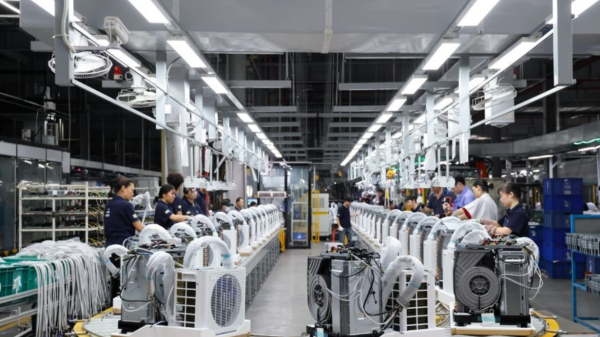
Developing domestic industry would require sustained investment in skills, suppliers and infrastructure. For German companies, the commercial calculation would include the availability of reliable power, competitive transport costs and sufficient customers to justify production.
The opportunity is consequently broader than securing access to raw materials. A processing facility, an engineering operation or a manufacturing partnership can create longer relationships between companies than a simple commodity purchase. Such investments also demand greater confidence in contracts and operating conditions.
There is already a European policy framework for this ambition. At the first EU–Central Asia summit in Samarkand in April 2025, leaders upgraded relations to a strategic partnership and endorsed a 2025–2026 roadmap under the EU–Kazakhstan partnership on raw materials, batteries and renewable hydrogen. European Council
That framework gives bilateral German initiatives a wider relevance. Successful projects could help demonstrate how Europe’s regional commitments translate into industrial activity. Announcements alone cannot establish that the strategy is working.
Transport will be an equally practical test. The Berlin business discussions covered the Trans-Caspian International Transport Route, alongside railway and logistics modernisation. The Astana Times
The route also features in the EU’s regional agenda. At Samarkand, leaders supported coordination on infrastructure along the Middle Corridor, with the ambition of connecting Europe and Asia in 15 days or less. That is a development objective, rather than a universal delivery guarantee. European Council
For a manufacturer deciding where to invest, predictable journeys matter as much as headline transit times. Port handling, border procedures and connections between rail and shipping services all affect whether a route can support regular production schedules. Transport and industrial investment therefore need to advance together.
The partnership also has an institutional dimension. The EU–Central Asia summit placed rule of law, labour rights and fundamental freedoms within the relationship. Maintaining those commitments alongside commercial engagement would give the European strategy greater credibility. European Council
The next phase of German–Kazakh cooperation should be judged through concrete evidence: financing secured, facilities operating, workers trained and goods moving reliably between markets.
Berlin and Astana have identified a substantial area of shared interest. Their opportunity now is to make it commercially durable. For Europe, the value of this partnership will become clearest when companies can build investment decisions around it.