








Thirty-five years after Kazakhstan closed one of the most notorious nuclear weapons testing grounds in history, President Kassym-Jomart Tokayev has used the anniversary to deliver a pointed message to the world’s nuclear powers: resume dialogue, strengthen arms control and ensure that nuclear testing never returns.
At a time when the international security order is under growing pressure and some of the agreements that helped contain nuclear rivalry after the Cold War have weakened, Kazakhstan is seeking to turn its own traumatic nuclear history into a renewed diplomatic argument for disarmament.
Marking the International Day against Nuclear Tests on 29 August, Tokayev called on nuclear-armed states to return to negotiations and urged the earliest possible entry into force of the Comprehensive Nuclear-Test-Ban Treaty, or CTBT.
“Our country’s position as one of the leaders of the global anti-nuclear movement remains unchanged,” Tokayev said, according to Kazakhstan’s presidential administration.
He called for negotiations between nuclear powers and “decisive multilateral action to eliminate the threat of nuclear weapons use”.
For Kazakhstan, the date carries significance far beyond diplomatic symbolism.
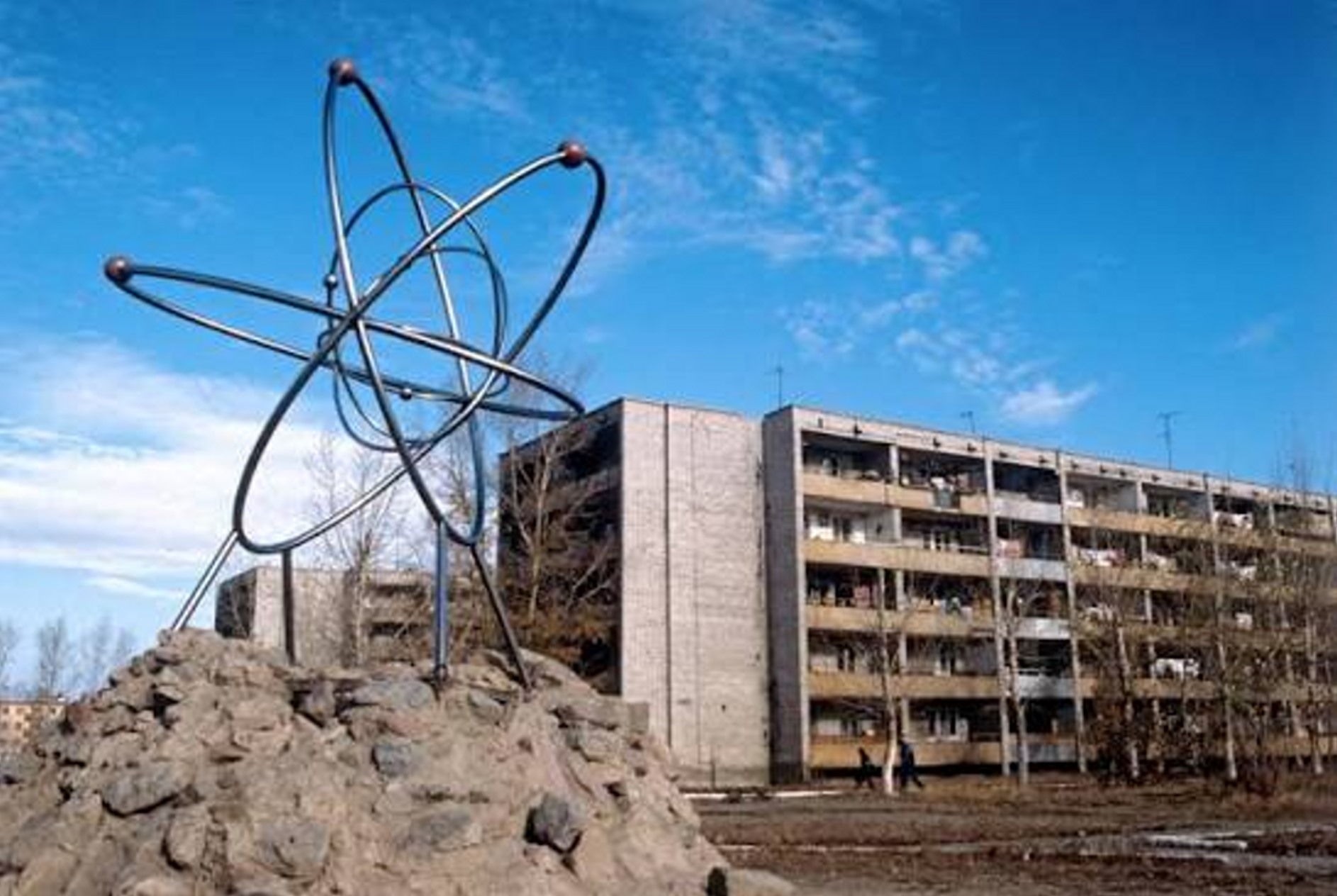
On 29 August 1991, the Semipalatinsk nuclear test site in north-eastern Kazakhstan was closed. It had been the Soviet Union’s principal nuclear weapons testing ground and the location of 456 nuclear tests between 1949 and 1989, including atmospheric and underground detonations.
The consequences extended far beyond the perimeter of the test site. The United Nations has estimated that nearly 1.5 million people were affected by nuclear testing, while extensive areas were contaminated by radiation.
That history gives Kazakhstan a distinctive voice in the international nuclear debate.
Tokayev described the closure of Semipalatinsk as a warning that should continue to resonate worldwide.
“Thirty-five years later, this date will serve as a reminder to all humanity of the tragic consequences of nuclear tests and as a call to prevent them from ever happening again,” he said.
A country that gave up nuclear weapons
Kazakhstan’s argument is strengthened by another remarkable chapter of its post-Soviet history.
When the Soviet Union collapsed, Kazakhstan found itself with a huge nuclear weapons infrastructure on its territory. Rather than retain the capability, the newly independent country chose to relinquish the weapons and establish itself internationally as a non-nuclear state.
Tokayev described that decision as a deliberate choice in favour of peace and long-term security.
“By voluntarily renouncing the fourth-largest nuclear arsenal on the planet, Kazakhstan made a historic choice in favor of peace, security and sustainable development,” he said.
It has subsequently made nuclear non-proliferation one of the defining elements of its foreign policy.
Kazakhstan was also responsible for proposing the creation of the International Day against Nuclear Tests, an initiative unanimously supported by the UN General Assembly. The first international observance took place in 2010.
This history matters because Tokayev’s appeal comes at an increasingly uncertain moment for nuclear arms control.
An unfinished treaty
The Comprehensive Nuclear-Test-Ban Treaty was opened for signature in 1996 with a simple but profound objective: to prohibit nuclear test explosions anywhere in the world.
Thirty years later, however, the treaty has still not formally entered into force.
The CTBT currently has 188 signatories and 179 ratifications, demonstrating overwhelming international support. But its provisions require ratification by a specified group of 44 states possessing nuclear technology when the treaty was negotiated before it can become legally binding.
Nine of those states have yet to ratify: China, Egypt, India, Iran, Israel, North Korea, Pakistan, Russia and the United States.
India, North Korea and Pakistan have not signed it.
Russia had ratified the treaty but revoked its ratification in November 2023. China and the United States signed it in 1996 but have never completed ratification.
The treaty nevertheless represents one of the more successful international norms of the post-Cold War period.
More than 2,000 nuclear tests were carried out during the five decades before the CTBT opened for signature. Since 1996, nuclear tests have occurred on only ten occasions, according to the Comprehensive Nuclear-Test-Ban Treaty Organization, and North Korea is the only country to have conducted nuclear explosive tests during the 21st century.
Tokayev’s warning is therefore also a defence of a system that has largely succeeded in suppressing nuclear testing — but whose legal foundations remain incomplete.
Nuclear weapons and nuclear energy are not the same debate
There is another important dimension to Kazakhstan’s position.
Tokayev’s opposition to nuclear weapons does not translate into opposition to nuclear technology.
On the contrary, Kazakhstan is now moving towards the development of civilian nuclear power. Tokayev emphasised that nuclear energy should be used for “exclusively peaceful and constructive purposes”, presenting civilian nuclear development as compatible with the country’s anti-nuclear weapons philosophy.
This distinction has particular relevance for Europe.
Kazakhstan is already an important part of Europe’s nuclear energy supply chain. According to the Euratom Supply Agency, Kazakhstan supplied 20.31% of the natural uranium delivered to EU utilities in 2025, making it the EU’s second-largest source after Canada.
The connection became even more politically significant during Tokayev’s visit to Brussels in June.
Following meetings with European Council President António Costa and European Commission President Ursula von der Leyen on 23 June 2026, the EU and Kazakhstan specifically identified energy security as an area for deeper strategic cooperation.
Their joint statement recognised Kazakhstan as an important supplier of oil and uranium to Europe and highlighted the potential for increased cooperation in both renewable energy and civil nuclear energy.
That places Kazakhstan in an unusual position.
It is simultaneously one of the world’s most prominent advocates of nuclear disarmament and one of the most important suppliers of the raw material on which civilian nuclear power depends.
Rather than regarding those positions as contradictory, Astana’s policy is increasingly built around distinguishing sharply between the destructive and peaceful uses of atomic technology.
Europe has a stake in the argument
For the European Union, Tokayev’s intervention is therefore not an abstract diplomatic message from a distant Central Asian state.
Kazakhstan has become increasingly significant to Europe’s efforts to diversify energy supplies and strategic raw materials, particularly as Brussels attempts to reduce potentially dangerous dependencies.
EU-Kazakhstan relations have also expanded far beyond energy.
During Tokayev’s June visit to Brussels, European and Kazakh leaders agreed to deepen their strategic partnership in critical raw materials, transport, digitalisation and emerging technologies. They also reaffirmed their commitment to strengthening the international disarmament and non-proliferation regime.
Kazakhstan’s geopolitical position adds another dimension.
It shares a vast border with Russia and another with China, while simultaneously developing closer political and economic relationships with the European Union and maintaining partnerships with the United States and other Western countries.
That makes Astana one of a relatively small number of governments able to maintain meaningful dialogue across increasingly divided geopolitical blocs.
In an era when communication between major powers has become more difficult, that may make Kazakhstan’s diplomatic role increasingly relevant.
A warning written into the landscape
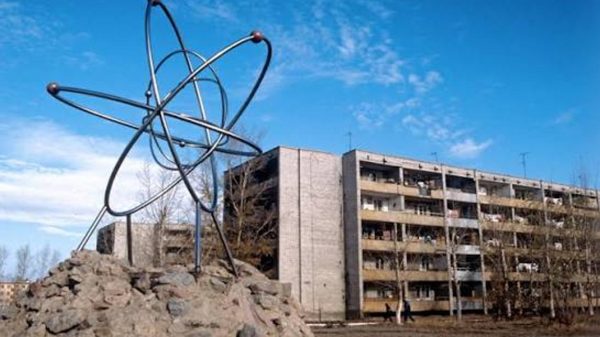
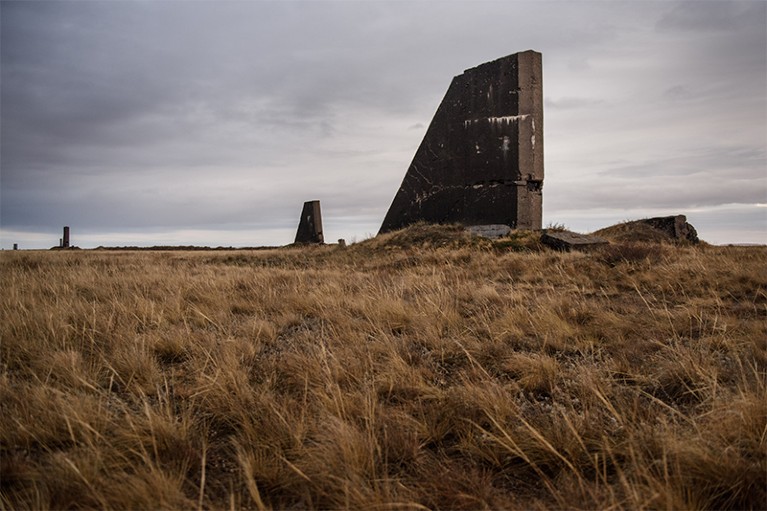
The ruins of Semipalatinsk remain a stark physical reminder of what the nuclear arms race once meant.
Between 1949 and 1989, explosions equivalent collectively to thousands of Hiroshima-sized bombs were detonated at the site, according to UN documentation. Communities surrounding the testing ground were exposed to radioactive fallout whose health and environmental effects endured long after the final explosion.


Kazakhstan has sought to transform that legacy from one of victimhood into one of diplomacy.
Semipalatinsk’s closure was followed by the relinquishment of nuclear weapons, Kazakhstan’s participation in the Central Asian Nuclear-Weapon-Free Zone and its persistent advocacy of nuclear disarmament.
But Tokayev’s latest message contains an uncomfortable implication.
The political assumptions that allowed the world to move progressively away from nuclear testing after the Cold War cannot simply be taken for granted.
The CTBT is now 30 years old and still awaits entry into force. Relations between the major nuclear powers are deeply strained. Nuclear weapons have again assumed a conspicuous place in geopolitical confrontation.
Against that background, Kazakhstan’s argument has an unusual moral force.
Few countries have experienced nuclear testing on the scale Kazakhstan did. Fewer still subsequently possessed nuclear weapons and voluntarily relinquished them.
Thirty-five years after the gates of Semipalatinsk were closed, Tokayev is effectively asking the world’s nuclear powers to remember why they were closed in the first place.
The message from Astana is straightforward: nuclear deterrence may remain part of international politics, but nuclear testing does not have to be — and dialogue between nuclear powers is more essential when relations are deteriorating, not less.
For Europe, confronting war on its eastern frontier while simultaneously reconsidering energy security and strategic autonomy, that is a message worth hearing.