


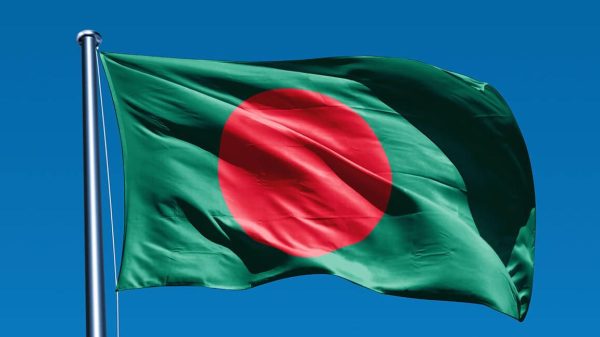



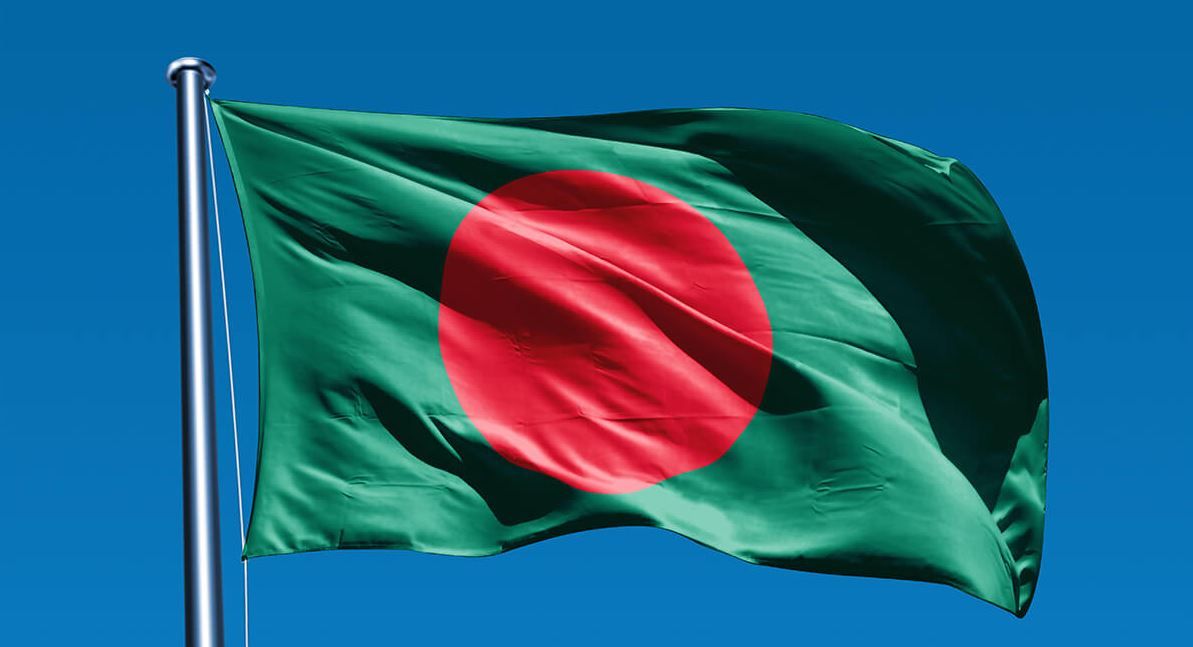
Last week a bombshell report on U.S.-Bangladeshi relations dropped in the Washington Post. Leaked audio revealed a U.S. diplomat based in Dhaka saying that he wanted the political party, Jamaat-e-Islami, to be the country’s “friends”. While it’s not uncommon to build diplomatic relationships with rising political parties, Jamaat-e-Islami is no ordinary group. In fact, it is the country’s largest Islamist party and the very same which has been banned for over twenty years by Russia as a designated terrorist organisation.
Despite losing its electoral registration over a decade ago following an outburst of anti-Hindu violence, Jamaat is polling 2nd just a month ahead of the general elections in Bangladesh. If the U.S. stands firmly behind Jamaat, it marks a fundamental shift and perhaps signifies one of the biggest mistakes the State Department has made in recent years.
Born out of a movement opposing the creation of Bangladesh and inspired by the Muslim Brotherhood, Jamaat aligned with Pakistan following the Partition of India. During the Bangladesh War of Independence, Jamaat formed brutal paramilitary groups which targeted civilians opposed to Bangladesh’s independence.
That undercurrent of violence has failed to truly dissipate. Throughout the 2010s, Bangladesh wrestled with a slate of high-profile attacks underpinned by fundamental Islamist groups. In 2013, a wave of anti-Hindu attacks swept through Bangladesh. Temples were destroyed, businesses ransacked, thousands of homes demolished, and over 60 people killed. Eyewitness reports from survivors shared that the attackers were taking part in rallies organised by Jamaat.
In 2016, militants attacked the Holey Artisan cafe in Dhaka, killing 18 people. Authorities in Bangladesh blamed Jamaat-ul-Mujahideen Bangladesh, an Islamist militant organisation. And while Jamaat-e-Islami denied any affiliation or responsibility for these attacks, an analysis by the United States Institute for Peace noted that Jamaat’s presence is “emblematic of this type of organised Islamism that can indirectly create the ideological conditions for radicalisation to violence”.
In response, Bangladesh’s then Prime Minister worked to dismantle the party’s financial structures and rein in its growing political influence by cancelling the party’s electoral registration. But in June 2025, after that Prime Minister’s ouster, a court reversed the ban and since, then Jamaat has gained a growing foothold in the country’s politics, exerting greater influence and a party that puts God above the democratic process.
Today, Jamaat is the most ‘liked’ party in the Country and has cemented its relevance through partnerships with the NCP, the party born out of the student movement in the 2024 protests. This may prove to be an unhappy union, as the NCP are dissatisfied with the number of seats allocated in the partnership. Jamaat is also aiming to form a broader political alliance with other Islamist parties including Khelafat-e-Majlish, Islami Andolon, and religious forums like Hefazat e Islam, which will ultimately shift Bangladesh’s mainstream politics to the right.
However, their popularity has only heightened growing concerns about conservative Islamic attitudes, especially in a time of deep divisions in the country. Since 2024 revolution, there have been a number of reports of mob violence targeted at women, as well as the cancellation of girls’ sports games and several brutal rapes of women and children. Although Jamaat insists they are a moderate group, less than four percent of their candidates at the upcoming general elections will be women, and quotas were reportedly one of the main sticking points for the party during the July Charter negotiations. For a country that has been famed for its female leadership, this backsliding is deeply concerning.
The future for Bangladesh is looking increasingly uncertain, especially for minorities, who are facing the possibility of a government that does not view them as equal and full citizens. Much of the blame can be placed at the feet of the Interim Government, which was supposed to manage a peaceful transition. Instead, it has tanked the economy, acted unlawfully against business groups, allowed attacks on minorities and focused on stoking divisions, while turning a blind eye to the Islamist threat.
In a country which has become deeply divided along religious lines, grappling with the ongoing effects of the Rohingya refugee crisis and in the midst of souring relations with India, these elections may not offer the hope many desire.