



The Communist Party of China (CPC) held the Fourth Plenary Session of the 20th Central Committee, at which it deliberated over and adopted the recommendations for formulating the 15th Five-Year Plan, drawing significant global attention.
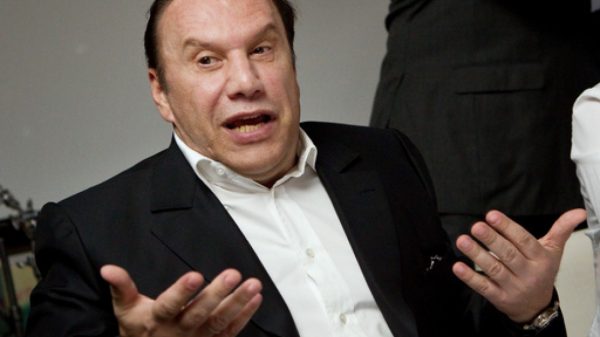
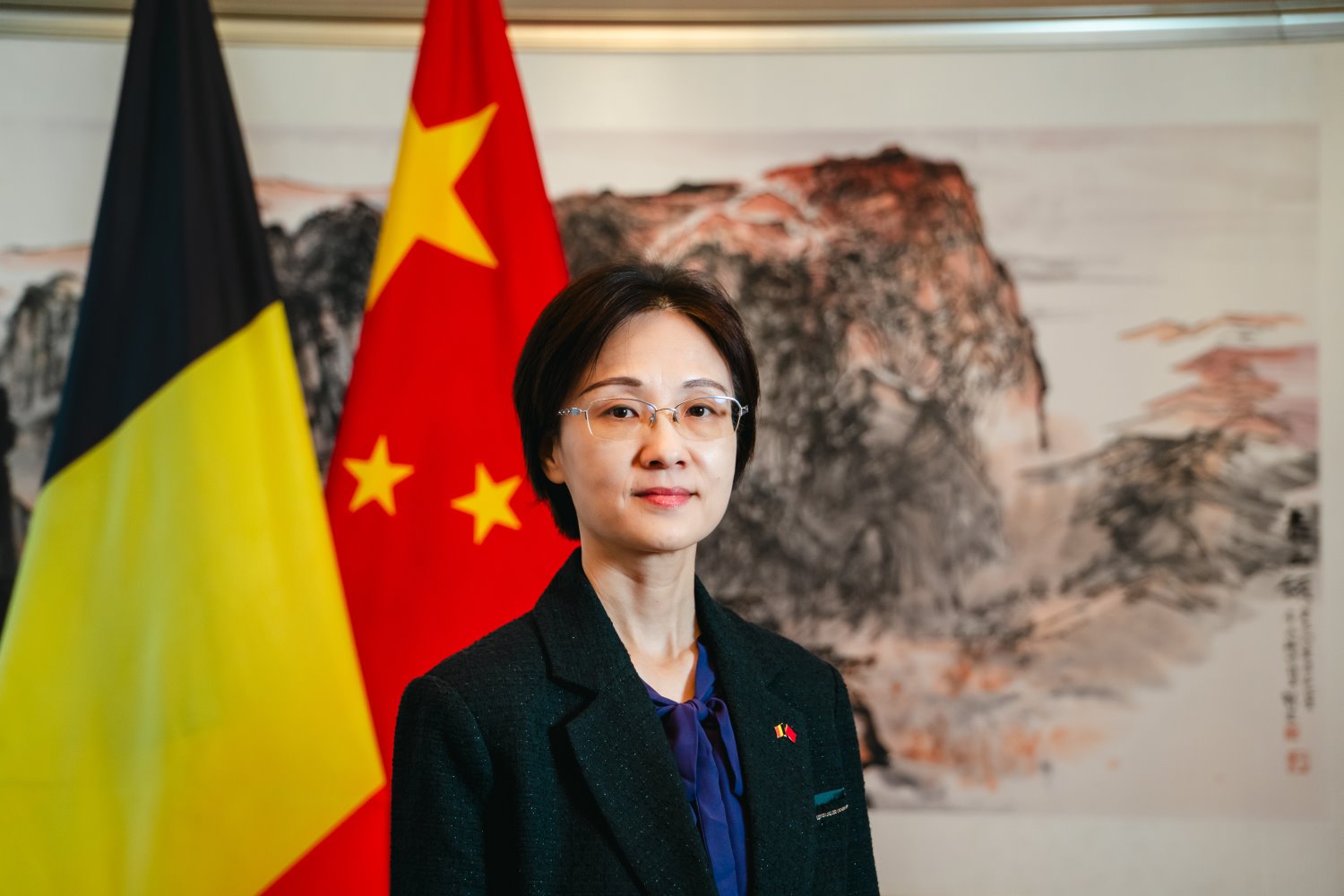
Li Yan (Pictured above), Charge d’Affaires a.i. of the Embassy of China in Belgium, gave an interview to EU Reporter and shared with us more information on what China’s 15th Five-Year Plan will bring to the world.
“In October this year, the Fourth Plenary Session of the 20th Central Committee of the CPC was successfully convened in Beijing. The plenum deliberated over and adopted the Recommendations of the Central Committee of the Communist Party of China for Formulating the 15th Five-Year Plan for National Economic and Social Development.
It laid out the top-level design and strategic blueprint for China’s development in the next five years. This marks another full mobilisation and comprehensive deployment to build on the momentum and advance Chinese modernisation. It also serves as a “golden key” to understanding and grasping China’s development in the next five years.
The scientific formulation and continuous implementation of the Five-Year Plans—following one blueprint through to the end and advancing the work step by step—has been an important governance practice of the CPC and a key political advantage of socialism with Chinese characteristics. It has ensured consistency in China’s national governance and macro-level policies, demonstrated the appeal of China’s approach to governance, and contributed Chinese wisdom to global efforts in exploring new models of sustainable development.
Since 1953, China has formulated and carried out 14 consecutive Five-Year Plans, during which the country has transformed itself from a poor and backward agrarian nation into the world’s largest manufacturer and the world’s second-largest economy, creating the “two miracles” of rapid economic growth and long-term social stability. The Five-Year Plans have borne witness to the historic journey of Chinese modernisation. Looking ahead, China will continue to advance modernisation through the 15th and 16th Five-Year Plan periods, with the goal of basically achieving socialist modernisation by 2035.
Good governance is grounded in consistency with the well-being of the people at its core. The formulation of each Five-Year Plan is not only a process of gathering public views, but also one of building social consensus. China has always upheld a people-centred philosophy, using the sense of fulfilment, happiness and security of its 1.4 billion people as the fundamental measure of its development efforts. China has established the world’s largest education, social security and healthcare systems. The country’s average life expectancy has reached 79 years, and more than 560 million cross-provincial medical visits have been settled directly through national insurance platforms. China continues to safeguard and improve people’s well-being through development.
The recommendations for formulating the 15th Five-Year Plan dedicate an entire section to “ensuring and improving public well-being and promoting common prosperity for all”, underscoring the fundamental goal of achieving common prosperity for all. The recommendations outline a range of balanced and accessible policy measures, such as promoting high-quality and sufficient employment and improving the income distribution system, while reaffirming that meeting the people’s aspirations for a better life is both the starting point and ultimate goal of Chinese modernisation.
The 15th Five-Year Plan is not only a grand blueprint for China’s economic and social development over the next five years, but also a vision for cooperation with the rest of the world. It sends a clear message that China is committed to sharing opportunities, promoting common development, fostering win-win cooperation, and working with all countries to build a community with a shared future for humanity. In the next five years, China’s momentum for high-quality development will become even stronger. We will seize the historic opportunities presented by the new round of scientific and technological revolution and industrial transformation, enhance the overall performance of our national innovation system, raise our innovation capacity across the board, and continue to foster new, quality productive forces.
In the next five years, China will open its doors even wider. We will steadily expand institutional opening-up, promote broader international economic flows, align with high-standard international trade and economic rules, expand market access, and unilaterally open up more sectors to more regions. We will promote innovative development of trade and ensure both easy market access and accommodating business environments for foreign investors. In the next five years, China will unwaveringly uphold the principle that “lucid waters and lush mountains are invaluable assets” and put it into concrete action. Guided by our goals of achieving peak carbon emissions and carbon neutrality, we will advance carbon reduction, pollution control, ecological expansion and economic growth in a coordinated manner, taking concrete actions to lead global green development. For more than a decade, China has contributed over 30 per cent to global economic growth. In the next five years, China will continue to demonstrate the resilience and vitality of a major economy, injecting new impetus into the global economy. Its vast domestic market, complete industrial system and abundant human resources will create unprecedented opportunities for the world. The “next China” is still China. Believing in China means being optimistic about tomorrow, and partnering with China means embracing opportunities.
Belgium and China are important partners for each other. Complementary strengths and mutual benefits are defining features of our cooperation. As China continues to advance Chinese modernisation, we will create even more opportunities for cooperation with Belgium and serve as a vast market and application platform for Belgian products and technologies. We are ready to share the fruits of Chinese modernisation with Belgium and join hands to further deepen the China-Belgium all-round partnership of cooperation.”
- The current international landscape is undergoing changes and turbulence. Multilateralism is facing serious challenges. On the occasion of the 80th anniversary of the United Nations, Chinese President Xi Jinping put forward the Global Governance Initiative (GGI). We also note that the 15th Five-Year Plan emphasises “acting on the GGI and working to guide the development of the international order in a more just and equitable direction”. How will this initiative contribute to the international governance system?
“This year marks the 80th anniversary of the victory in the World Anti-Fascist War and the founding of the United Nations. In this special historical year of taking stock of the past and envisioning the future, President Xi Jinping solemnly proposed the GGI, which comes at the right time, points the way forward, and demonstrates responsibility. It is another important global public good that China has contributed to the world following the three major global initiatives, namely, the Global Development Initiative, the Global Security Initiative and the Global Civilisation Initiative. It addresses key questions of “who should govern, how to govern, and for whom to govern” in the context of a growing global governance deficit. It also elaborates the principles, methods and pathways that should be followed to reform and improve global governance. The GGI is built on five core principles, namely, adhering to sovereign equality, abiding by international law, practising multilateralism, advocating the people-centred approach, and focusing on taking real actions. Sovereign equality is the foremost premise of global governance; international law provides the fundamental safeguard; multilateralism constitutes the basic pathway; the people-centred approach represents the underpinning value; and an action-oriented focus serves as an important principle.
It is important to stress that the GGI is not intended to overturn the existing international order or to create another framework. Its spirit and principles are fully consistent with the purposes and principles of the U.N. Charter. The Initiative aims to firmly support the United Nations in playing its central role in international affairs, encourage joint efforts by the international community, and promote the reform and improvement of global governance so as to respond more effectively to the challenges of our times. It responds to the common aspirations of people in all countries, meets the urgent needs of the world today, and has received broad support.
China and Belgium both firmly support multilateralism, sharing extensive common ground and a broad space for cooperation on global governance. China stands ready to work with Belgium to enhance mutual understanding, enhance communication and coordination, and jointly promote the building of a more just and equitable global governance system.”
- Building a community with a shared future for humanity is a major guiding vision of China’s diplomacy, and it’s also articulated in the 15th Five-Year Plan. Could you elaborate on the meaning of this vision, and how is it relevant to Europe?
“In the universe, there is only one Earth, the shared home of humanity. This is a consensus broadly embraced by people around the world. In the face of a question raised by the world, by history, and by the times: “Where is humanity headed?”, President Xi Jinping propounded the idea of building a community with a shared future for humanity. As the term suggests, with our destinies being interconnected, all peoples, all countries and all individuals must stand together in adversity and through thick and thin, navigating towards greater harmony on this planet that we call home. We should endeavour to build an open, inclusive, clean and beautiful world that enjoys lasting peace, universal security and common prosperity, turning people’s longing for a better life into reality.
President Xi Jinping first raised the vision of building a community with a shared future for humanity when addressing the Moscow State Institute of International Relations in 2013. He fleshed it out with a five-point proposal in his speech at the General Debate of the 70th Session of the U.N. General Assembly in 2015 and further proposed five goals for the world in his speech at the United Nations Office in Geneva in 2017. These milestones reflect the steady expansion and enrichment of the vision.
The implementation of the vision has been advancing steadily. From bilateral to multilateral and from regional to global dimensions, ground-breaking results have been achieved on every front. The Belt and Road Initiative and the four major global initiatives have taken root and borne fruit, bringing prosperity and stability to the world and creating substantive benefits for the people. It is now widely recognised in the international community that the vision has nothing to do with self-interest and protectionism. Instead, by presenting China’s vision of the course of human development, it confronts the hegemonic thinking of certain countries that seek supremacy. It is therefore of great significance to promote solidarity and cooperation among all countries and create a better future for humanity.
China and Europe are two major forces, markets and civilisations in today’s world. Building a community with a shared future for humanity is not only necessary but also feasible for our two sides. It is not difficult to see that this vision aligns closely with many of Europe’s cultural values, including cosmopolitanism, harmony with nature, eclecticism, and equality and cooperation. The practical cooperation between China and Europe across various fields has also laid a solid material foundation for this shared future. We look forward to working hand in hand with Europe to build a community of shared interests, shared benefits, shared responsibilities and shared prospects, and to contribute even more to peace and prosperity for both sides and for all humanity.”
- On October 25, 1971, the 26th Session of the U.N. General Assembly adopted Resolution 2758 by an overwhelming majority, restoring all the lawful rights of the People’s Republic of China in the United Nations. Some have argued that since the resolution does not explicitly mention “Taiwan”, “it has nothing to do with Taiwan”. We also note that China has recently designated October 25th as the Commemoration Day of Taiwan’s Restoration. What is China’s response to this?
“UNGA Resolution 2758 clearly states that it “decides to restore all its rights to the People’s Republic of China and to recognize the representatives of its Government as the only legitimate representatives of China to the United Nations, and to expel forthwith the representatives of Chiang Kai-shek from the place where they unlawfully occupy at the United Nations and in all the organizations related to it”. The resolution resolved once and for all the question of the representation of the whole of China, including Taiwan, in the U.N., as a political, legal and procedural issue. The one-China principle is the premise and foundation for UNGA Resolution 2758, while the resolution solemnly confirms and fully embodies the one-China principle.
Why didn’t the terms “Republic of China” or “Taiwan” appear in Resolution 2758? In 1945, when the U.N. was founded, the official name of China was the Republic of China (ROC). On October 25 that year, the ceremony to accept Japan’s surrender in Taiwan, province of the China war theatre, took place in Taipei, whereupon Taiwan and the Penghu Islands were restored to Chinese sovereignty. In 1949, the Chinese people overthrew the ROC government, renamed the country the People’s Republic of China, and established the Central People’s Government of the People’s Republic of China. It was a new government replacing the old one within the same country, and China’s sovereignty and inherent territorial boundaries stayed unchanged. Thus, the government of the People’s Republic of China naturally and fully enjoys and exercises China’s sovereignty, including sovereignty over the Taiwan region. Although in 1949, the Kuomintang ruling clique continued to use “Republic of China” and “government of the Republic of China” after retreating to Taiwan, however, the so-called “Republic of China” and “government of the Republic of China” in 1949 were fundamentally different from the “Republic of China” and “government of the Republic of China” in 1945 when the U.N. Charter was signed. It had no authority to exercise state sovereignty on behalf of China and had no right to continue representing China in the U.N. Therefore, the term “representative of the government of the Republic of China” and the phrase “expelling the representatives of the Taiwan authorities” must not be used in UNGA Resolution 2758.
The question of Taiwan’s status was fundamentally resolved in 1945, when the Chinese people won the great victory of the War of Resistance Against Japanese Aggression. China’s recovery of Taiwan is a victorious outcome of World War II and an integral part of the postwar international order. Any attempt to challenge UNGA Resolution 2758 constitutes not only a challenge to China’s sovereignty and territorial integrity, but also a challenge to the authority of the U.N. as well as the post-World War II international order. Some countries peddle the pernicious falsehood of “Taiwan’s status being undetermined”, which constitutes a gross violation of the fundamental norms of international relations, including the principles of sovereign equality and non-interference in internal affairs. Flagrantly reversing the course of history is absurd and highly dangerous, and is doomed to fail.
This year marks the 80th anniversary of the restoration of Taiwan. In October, the Standing Committee of the National People’s Congress of the People’s Republic of China decided to designate October 25 as the Commemoration Day of Taiwan’s Restoration. It speaks volume of the firm stance of all the Chinese people to uphold the one-China principle and defend national sovereignty and territorial integrity, and represent the shared aspiration of all Chinese sons and daughters at home and abroad, including our Taiwan compatriots. China has consistently adhered to the basic principles of “peaceful reunification and One Country, Two Systems”. We stand ready to strive with the greatest sincerity and utmost efforts for the prospect of peaceful reunification, but we will never allow Taiwan to be separated from China. Any form of “Taiwan independence” separatist activities will not be tolerated or condoned. China’s complete reunification is the trend of history and the times. It must be achieved and will surely be achieved.
- November 25 marks the International Day for the Elimination of Violence against Women. This October, on the occasion of the 30th anniversary of the Fourth World Conference on Women, the Global Leaders’ Meeting on Women was held in Beijing, where President Xi Jinping delivered a keynote speech. Could you brief us on the meeting? What contributions will China make to the advancement of the women’s cause worldwide?
In 1995, the Fourth World Conference on Women was successfully held in Beijing, with representatives from Belgium and other 188 countries and regions in attendance. The Beijing Declaration and Platform for Action adopted at the conference became a landmark in the global cause of gender equality. Standing at the historical juncture of the 30th anniversary of the Fourth World Conference on Women, the Global Leaders’ Meeting on Women was successfully convened in Beijing from 13 to 14 in October 2025. Under the theme “One Shared Future: New and Accelerated Process for Women’s All-round Development”, participants from around the world gathered to celebrate the achievements in advancing women’s development globally and to jointly chart a grand blueprint for the future of the global women’s cause.
President Xi Jinping attended the Global Leaders’ Meeting on Women 2025 and put forward four proposals: First, we should jointly foster an enabling environment for women’s growth and development. Second, we should jointly cultivate powerful momentum for the high-quality development of the women’s cause. Third, we should jointly develop governance frameworks to protect women’s rights and interests. Fourth, we should jointly write a new chapter in promoting global cooperation on women. President Xi announced that in the next five years, China will donate another 10 million U.S. dollars to U.N. Women; earmark a quota of 100 million U.S. dollars in China’s Global Development and South-South Cooperation Fund; launch 1,000 “small and beautiful” livelihood programs; invite 50,000 women to China for exchange and training programs; and establish a Global Center for Women’s Capacity Building, which is aimed at training more female talent through cooperation.
At present, complex challenges still hamper the all-around development of women, and equality between men and women remains a lofty yet arduous task. Recently, the Belgian Deputy Prime Minister and Foreign Minister Maxime Prévot stated that violence against women and girls worldwide must be stopped. China fully agrees with this. In China, women’s cause has always been an integral part of the epic Chinese modernisation endeavours, and we actively provide opportunities and support forthe global women’s cause through our development. China looks forward to taking this summit as a new starting point and working together with Belgium and all other countries to carry forward the spirit of the Beijing World Conference on Women. We hope to build a broader consensus, open up wider pathways and take more practical actions to accelerate the all-around development of women, and to move steadily toward the goal of building a community with a shared future for humanity.
- The year 2026 marks the 55th anniversary of the establishment of diplomatic relations between China and Belgium. What’s your comment on China-Belgium relations? What are your expectations for its future development?
Belgium is an important partner for China in Europe. This year marks the first year in office of the new federal government of Belgium. Under the strategic guidance of the leaders of both countries, the China-Belgium all-round partnership of friendship and cooperation has yielded new and fruitful results.
First, new highlights in high-level exchanges. In early July, Chinese Foreign Minister Wang Yi met with Belgian Prime Minister Bart De Wever and Deputy Prime Minister and Foreign Minister Maxime Prévot. The two sides held in-depth strategic discussions on China-Belgium relations as well as regional and international issues, injecting new impetus and marking a new starting point for our bilateral relations.
Second, new momentum in practical cooperation. From January to October this year, China–Belgium trade reached 34 billion U.S. dollars, registering a 2.8 per cent year-on-year increase despite the severe challenges facing the international economic and trade order. China remains one of Belgium’s top three trading partners outside the European Union. We have also deepened and expanded our exchanges in the field of science and technology. The 7th China-Belgium Science and Technology Exchange Symposium and the World Young Scientist Summit 2025 European Event were successfully convened. Our cooperation continues to advance in areas such as agriculture, food, pharmaceuticals, green development, as well as maritime, land, air and rail transport and logistics.
Third, new vitality in people-to-people and cultural exchanges. China’s visa-free policy continues to deliver tangible benefits, and direct flights between our two countries have reached a new high. Cooperation on biodiversity involving giant pandas and golden snub-nosed monkeys is flourishing. Young Chinese artists have actively participated in the Queen Elisabeth Competition and achieved remarkable success. A series of cultural, artistic, folk and tourism events have been warmly received, further strengthening the bonds of friendship between our two peoples.
Next year will mark the 55th anniversary of diplomatic relations between China and Belgium. Looking back at the history of China–Belgium relations, despite the fluctuations of the international environment, friendship and cooperation have remained the defining feature of our ties. Belgium has all along played a unique role as a “bridge” in China-EU relations. In the current context, the best we can do and we should do is to enhance mutual trust and strengthen cooperation, which is in line with the fundamental interests of both sides. China is ready to work with all sectors in Belgium, guided by the important consensus reached by the leaders of our two countries, to contribute to the success of each other while serving the greater good of the world through mutual respect and win-win cooperation. The Embassy of China in Belgium is committed to opening more windows and doors for Belgian friends to gain a full, objective and accurate understanding of China and China-Belgium relations. And we will continue to build bridges and break barriers to strengthen communication and cooperation between our two countries and to deepen friendship between our two peoples.