




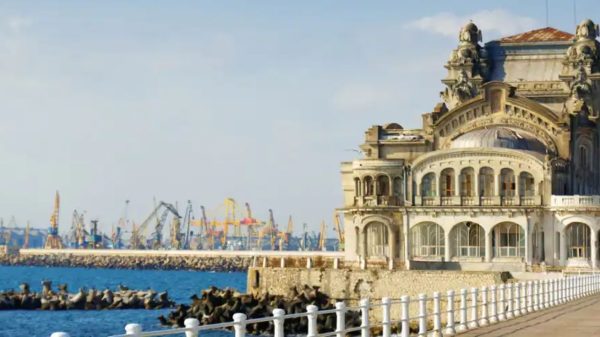








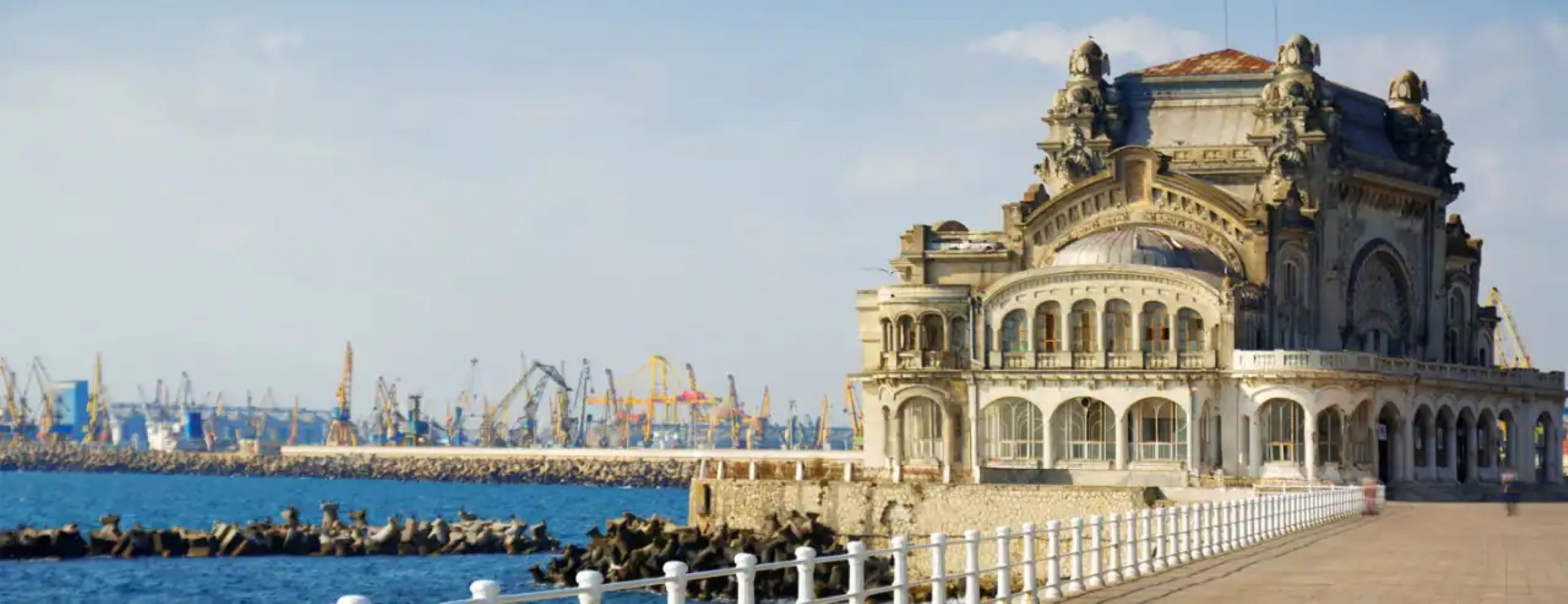
Romania’s Black Sea port of Constanţa is seeing a lot of action these days as the authorities are testing a new generation of anti-drone defense systems. The testing comes after Romanian forces destroyed a naval drone carrying an explosive on 20 August, following repeated drone incursions into Romanian airspace from east of the border. The new system is expected to detect and take down aerial and maritime threats. Weeks before that news broke, Romania’s customs authority is fighting a different kind of war – one against smuggled goods, writes Cristian Gherasim.
To that end, authorities have set a limit on what travelers can legally bring into the country from elsewhere in the EU. Romania is trying to beef up its defense against two different kinds of threats – one that shows on the radar and is linked to state actors, and another one that goes mostly undetected, chipping away at the state coffers. A shield on NATO’s eastern flank Authorities are now testing the anti-drone systems that are expected to become operational by the end of the year. They were acquired over the course of a few months and are planned to be installed in the coming period across the four military ports on the Black Sea and the Danube.
The anti-drone defense will provide coverage across air, sea, and underwater areas as it has the capability to identify, classify, and neutralize aerial and marine threats. Once deployed the system will be used to defend the Constanța military port and the Port of Constanța in general, as well as to protect the military ports in Mangalia, Tulcea, and Brăila, the main port areas along NATO’s eastern flank. Romania’s Minister of Defense, Radu Miruță, considered this to be a major security improvement to the country’s defense, albeit one that doesn’t entirely remove all threats. Another military expert from the seaport of Constanta – Alexandru Mitel- later commented saying that “the new system includes a high- performance 3D radar, electro-optical systems, and a passive electromagnetic emission detection system.
It features a 360-degree omnidirectional surveillance range.” Romanian airspace has recorded several drone incursions that prompted the Romanian Ministry of Defense to scramble the country’s F-16 fighter jets. For NATO, strengthening its eastern flank is a priority. As much of its eastern defense runs through a handful of Romania ports compels the North Atlantic Alliance to invest billions of euros to expand and modernize its military infrastructure, fuel networks, and combat forces across Romania’s eastern region. A softer touch on border security Romania is tightening another gap in its border security.
While the hard defense story was playing out, Romania’s Customs Authority published a joint order together with the National Agency for Fiscal Administration that clarifies how tobacco imports from other EU member states are policed. The new order states that a traveller can now bring in no more than 800 cigarettes — 40 packs, from another EU country once every 40 days. For alcoholic beverages, the limit applies to a one-year period and is 10 liters of spirits, 20 liters of intermediate products, and 90 liters of wine. Romania is among the first EU countries to go beyond quantitative indicators by introducing purchase frequency as an additional criterion for assessing personal consumption.
This closes a gray area that has long been exploited by smugglers taking advantage of the price gap and the ambiguity in the law. Romania’s northern, eastern, and southern borders are among the most lucrative and highly exposed transit routes for illicit cigarette smuggling in the European Union, driven by massive price disparities with non-EU neighbors and costing the state roughly €500 million annually in lost tax revenues in 2025. Early 2026 data have not been encouraging. They suggest elevated levels of tobacco smuggling. This makes the legislative change all the more relevant. Other countries’ experience suggests that fiscal policy can have unintended consequences of its own.
The September report by Oxford Economics, examined nine countries and found that abrupt excise increases were often followed by growth in the illicit market. The strongest such relationship was observed in the Netherlands where many people would be crossing borders to load up on cheaper products abroad. While correlation alone does not established causation, the industry-based study argues that policy consistency and can matter alongside enforcement when governments seek to curb illicit trade.
Smuggling routes rarely operate in isolation. The infrastructure used to move contraband goods is often the same infrastructure used for trafficking in persons, irregular migration, and broader organized crime activities. Why Brussels should care The impact of smuggling extends beyond Romania. This puts additional pressure on EU’s eastern borders and has implications for European security, making it an EU concern, not just a Romanian one. A vulnerability in a member’s state external border security is a vulnerability in the union’s own security, defense and not least its revenue base, public revenues across the EU.