


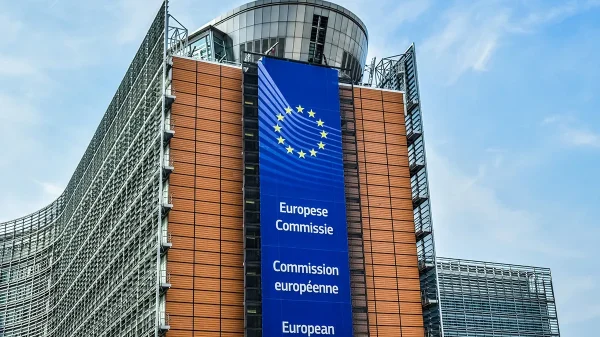




As EU leaders gathered in Brussels today for a crucial European Summit, the streets surrounding the EU institutions became the stage for a powerful demonstration of rural discontent. Thousands of farmers from across the European Union descended on the capital, bringing tractors, banners and a clear message: Europe’s agricultural policies and trade ambitions are putting farmers’ livelihoods at risk. The farmers brought potatoes and eggs to throw, along with sausages and beer for nourishment, and waged a furious back-and-forth with police.
A Summit Overshadowed by Protest
The demonstrations took place as EU leaders debated trade policy, budget priorities, the bloc’s external economic strategy, and the eminent threat posed by Russia. Meanwhile, outside the Summit, farmers blocked major roads in the European Quarter. Tensions escalated, leading to clashes between protesters and police. Fireworks exploded, tires burned, and security forces used water cannons to keep access routes open.

While such scenes have become increasingly familiar in Brussels, today’s protest reflected a broader and more coordinated mobilisation across Europe’s farming sectors — from cereal producers to livestock farmers and, notably, tobacco growers who say their concerns are often marginalised in EU policy debates.
Tobacco Growers Join the Front Line
Among the protesters were significant delegations of tobacco growers from Poland and Italy, who travelled to Brussels to voice their concerns about the direction of the Common Agricultural Policy (CAP) and the proposed EU–Mercosur trade agreement with South American countries.
“Today’s demonstration in Brussels marked an extraordinary and broad-based moment of participation by agricultural systems from across Europe, united in calling on the European Commission for agricultural, trade, fiscal and budgetary policies that are fairer, more coherent and respectful of farmers’ work”, said Gennarino Masiello, President of UNITAB Europe, which represents the interests of tobacco growers.

Polish tobacco farmers were among the most visible groups in the crowd. Many argue that they are being squeezed simultaneously by tighter EU regulations, declining support under the CAP, and increased exposure to international competition.
“We are not against trade. We are against unfair trade,” said Marek Kowalczyk, a tobacco grower from Poland’s Lubelskie region and a representative of a growers’ association. “Polish tobacco producers already face rising costs, stricter EU rules and declining support. Now we are told we must compete with imports produced under completely different standards. That is not a level playing field. If Mercosur goes ahead without safeguards, many family farms will simply disappear.”
For growers like Kowalczyk, the Mercosur agreement symbolises a wider concern that EU trade policy prioritises geopolitical and industrial objectives over the realities of farming on the ground.
CAP Reform and Funding Fears
Alongside trade, protesters repeatedly raised alarm over the future shape of the Common Agricultural Policy beyond 2027. Many farmers fear that CAP reforms will reduce income support while imposing additional environmental and administrative requirements.
“The Common Agricultural Policy is becoming less common and less protective,” said Anna Nowak, a farmer from the Mazovia region in Poland. “Environmental rules are important, but they must be realistic. We are being asked to do more with less support, while cheaper products enter the EU.”
Such concerns resonate strongly in regions where tobacco cultivation remains a key source of employment and economic stability, particularly in eastern and southern Europe.
Italian Growers Warn of Rural Impact
Italian farmers also featured prominently in the Brussels protest, with producers from regions such as Umbria and Veneto highlighting the long-term consequences for rural economies. Italian farming organisations have been among the most vocal critics of the Mercosur deal, warning that it could undermine Europe’s model of regulated, value-added agriculture unless strict reciprocity clauses are enforced.

Trade Policy Meets Political Reality
Inside the Summit, EU leaders discussed whether to advance or delay the ratification of the Mercosur agreement, with several member states, including Italy and France, expressing reservations. Critics argue that opening EU markets to large-scale agricultural producers in South America risks undercutting European farmers who must comply with higher environmental, labour and animal welfare standards.
A Growing Disconnect?
Today’s protest highlights a widening disconnect between EU-level decision-making and farming communities across the bloc. For tobacco growers from Poland and Italy, the issue is not opposition to reform or trade per se, but a call for policies that recognise the cumulative impact of regulation, funding changes and global competition.
As EU leaders continue their deliberations behind closed doors, the tractors and placards outside served as a visible reminder that agriculture remains not only an economic sector, but a politically sensitive cornerstone of Europe’s social fabric. Whether the voices raised in Brussels today will translate into policy adjustments remains an open question. Nevertheless, for many farmers, this protest was intended as a warning that patience is running thin.