








A European Parliament compromise on reforming the EU’s Sustainable Finance Disclosure Regulation (SFDR) has opened a politically sensitive dispute over whether entire industries should be excluded from sustainable investment — with fossil fuels offered a conditional transition route while tobacco remains outside.
The revision of the Sustainable Finance Disclosure Regulation, better known as SFDR, is emerging as a key political battleground over the future boundaries of sustainable finance in the European Union.
Although formally concerned with disclosure requirements and the categorisation of financial products, the dispute now goes considerably further. At stake is a fundamental question: should entire sectors be excluded from sustainable and transition finance because of the nature of their business, or should companies be judged primarily on their actual environmental performance, investment plans and capacity to transition?
That distinction has potentially significant consequences for companies, investors and access to capital.
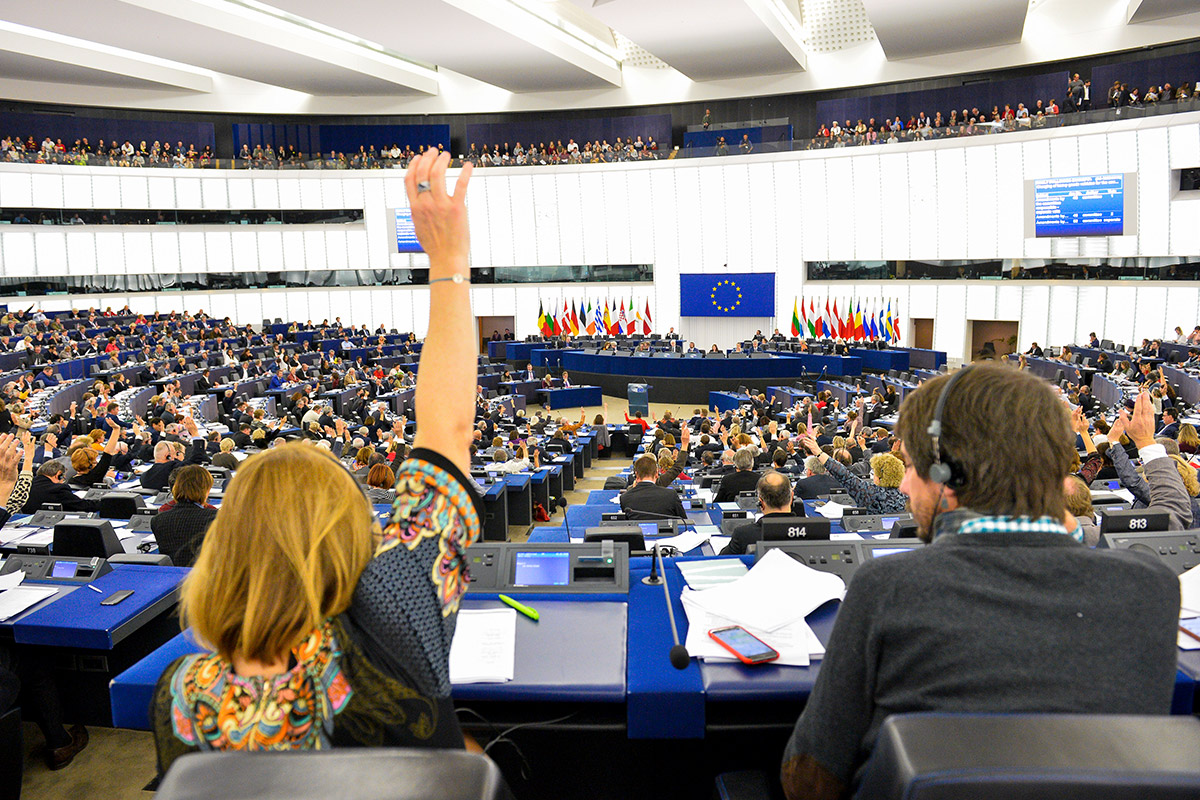
The file is currently under consideration in the European Parliament’s Economic and Monetary Affairs Committee, ECON, where a compromise has been reached between political groups ahead of the committee vote.
Under the emerging agreement, sectoral exclusions remain within the proposed framework. Tobacco cultivation and production, as well as controversial weapons, remain outside the relevant sustainable investment categories.
Fossil-fuel companies, however, have been given a potential route into the proposed transition category where specified conditions are met.
The result is an unusual regulatory distinction.
An oil or gas company may potentially demonstrate that it is directing sufficient capital towards sustainable activities and implementing a credible emissions transition. A tobacco business, however substantial its environmental improvements, would remain excluded because of the sector in which it operates.
Crucially, however, the EPP’s decision not to challenge the tobacco exclusion should not be read as an endorsement of blanket sectoral exclusions.
Markus Ferber, the EPP’s ECON coordinator, has told EU Reporter that the decision was driven by parliamentary arithmetic and the need to assemble a stable majority for the overall compromise.
In other words, the EPP did not abandon its reservations about blanket exclusions because it had become convinced that such exclusions were the right policy. It accepted the compromise because, in Ferber’s assessment, there was no realistic parliamentary majority for an alternative amendment that would have created a performance-based pathway for tobacco.
That distinction is politically important.
It means the tobacco exclusion survives not because the EPP has embraced the principle behind it, but because the group concluded that challenging it would jeopardise the broader compromise.
Ferber: transition should matter more than sector
Ferber made clear that his underlying policy position remains strongly performance-based.
“Per se, EPP does not like blanket sectoral exclusions, but unfortunately it is not only the EPP’s position that determines the final outcome of negotiations and we had to strike compromises with other political groups to achieve a stable majority,” he told EU Reporter.
Asked whether sustainable-finance rules should judge companies according to the sector in which they operate or according to their measurable environmental progress, Ferber was unequivocal.
“In my view, the objective should be to finance the transition,” he said. “Hence, environmental performance and credible transition plans should matter more than the sector.”
That comment goes to the heart of the controversy surrounding tobacco.
The sector remains excluded irrespective of whether individual companies reduce emissions, restructure production, invest in Taxonomy-aligned activities or adopt measurable transition plans.
Fossil-fuel companies, by contrast, are being offered a conditional route into the transition category.
The tobacco exclusion survived because of the numbers
Ferber’s most significant intervention concerns why the EPP did not attempt to overturn the tobacco exclusion through an alternative compromise amendment.
Asked directly why he was not tabling such an amendment, despite previously opposing blanket exclusions affecting tobacco, Ferber replied:
“We have assessed all options for a stable majority in the Parliament and were not convinced that tabling alternative compromises would yield such a majority.”
That answer makes the political calculus unusually clear.
The tobacco exclusion was not retained because Ferber or the EPP ECON leadership had positively embraced the underlying principle. It remained because the EPP judged that there were insufficient votes to replace it while preserving the wider agreement.
The distinction matters because it changes the interpretation of the compromise.
Rather than representing an ideological conversion by the EPP towards sector-based sustainable-finance rules, it represents a tactical concession made in the context of difficult parliamentary mathematics.
Ferber reinforced that point when discussing the wider negotiations.
“I am not enthusiastic about the compromise,” he said, “but it reflects what is politically possible in light of difficult majorities and a rapporteur that has pursued a hard-left line from the beginning.”
The Parliament’s lead rapporteur on the file is Dutch Renew Europe MEP Gerben-Jan Gerbrandy.
Ferber’s description of Gerbrandy’s approach as “hard-left” is his own political characterisation, but his remarks underline how far the SFDR revision has moved beyond a purely technical debate over disclosure rules.
EPP reservations remain
The EPP has repeatedly positioned itself as an opponent of unnecessary blanket exclusions and an advocate of competitiveness, regulatory simplification and performance-based rules.
A number of centre-right amendments tabled during the ECON process sought to remove or narrow the exclusion provisions.
The material submitted to EU Reporter notes that among the amendments tabled in committee, several concerning exclusions were proposed by EPP, ECR and other centre-right lawmakers.
Asked whether significant numbers of EPP members would have preferred the exclusions to be removed or narrowed, Ferber acknowledged that different views existed within the group.
“In a large and diverse political group, you always have different positions to reconcile,” he said.
He added that EPP shadow rapporteur Luděk Niedermayer had “checked back frequently to ensure that he has sufficient backing within our group.”
Ferber therefore rejects the suggestion that the final compromise amounts to Niedermayer departing from an agreed EPP line.
Asked directly whether there had been a disagreement between the two men over the treatment of tobacco and sectoral exclusions, he replied:
“No, our shadow rapporteur has faithfully defended the line agreed within our group, but it has always been clear that in compromise negotiations the EPP would not get 100% of its wishes. That is the nature of a compromise.”
Niedermayer was approached by EU Reporter for comment but had not replied at the time of publication.
Tobacco as the test case
The tobacco issue exposes the central philosophical question running through the SFDR revision.
Under a blanket exclusion, the decisive question is: what does this company produce?
Under a performance-based model, the question becomes: what is this company actually doing to transition?
The distinction matters because an automatic exclusion can remove the regulatory benefit of environmental improvement.
A company that reduces emissions, changes production methods, invests heavily in renewable energy or directs substantial capital expenditure towards EU Taxonomy-aligned activities may still receive exactly the same treatment as one making no transition effort at all.
That is the fundamental criticism of blanket exclusions contained in the material examined by EU Reporter.
The fossil-fuel exception makes the question more acute.
If an oil or gas company can potentially qualify for the transition category by demonstrating credible investment and emissions reductions, opponents of the tobacco exclusion ask why businesses in another lawful sector should not at least be permitted to make the same case.
Ferber’s own words strengthen that argument: environmental performance and credible transition plans, he says, should matter more than the sector itself.
Why fossil fuels are treated differently
Ferber nevertheless argued that there is a rationale for distinguishing between some industries.
“One can make an argument that energy companies engaged in fossil fuel projects today are likely to ultimately change their business model towards more sustainable projects, while a controversial weapons manufacturer is likely to still manufacture deadly weapons in the future,” he said.
“So, the transition case is weaker.”
That explanation addresses controversial weapons more directly than tobacco, however.
For tobacco, the unresolved policy question remains whether environmental transition should be assessed separately from the social and health characteristics of the product being manufactured.
That is precisely where the SFDR debate is becoming politically significant.
The issue is no longer merely whether tobacco is socially desirable. It is whether a sustainable-finance regulation should use sector identity as an automatic barrier to recognising environmental transition.
The Green Deal legacy
The controversy also reaches into the EPP’s wider political argument that the EU needs to move away from parts of the regulatory philosophy associated with the previous Commission and the European Green Deal.
Asked whether retaining blanket exclusions amounted to accepting part of that earlier approach, Ferber was sharply critical of the sustainable-finance framework as a whole.
“The whole sustainable finance framework is a legacy product from the previous two terms,” he said.
“In my personal view, it contains some fundamental flaws, that are difficult to change with targeted reviews of individual files.”
“We have done the best we could to fix some mistakes within the SFDR. That does not mean it is perfect. If I was given a blank slate, I would design the framework differently.”
His comments underline the political paradox.
The EPP remains sceptical of the principle behind some sectoral exclusions, yet has accepted a compromise that preserves them.
The explanation, according to its ECON coordinator, is not policy conversion but political necessity.
That is likely to become one of the most important distinctions in the debate as the file moves towards its committee vote and later parliamentary stages.
Two different approaches inside EU sustainable finance?
The controversy also raises questions of regulatory coherence.
The EU Taxonomy measures environmental sustainability using economic indicators including turnover, capital expenditure and operational expenditure associated with qualifying activities.
The SFDR compromise can operate differently by establishing a sectoral gateway before a company’s environmental performance is assessed.
The material examined by EU Reporter argues that this risks creating two different regulatory philosophies: the Taxonomy assesses measurable activity, while SFDR can exclude by sector identity.
That matters at a time when Brussels has promised simpler and more coherent regulation.
If transition finance is supposed to encourage companies to change behaviour, critics argue that the system needs to explain why measurable transition is sufficient for one sector but irrelevant for another.
Growers and SMEs watch closely
The impact is not confined to multinational tobacco manufacturers.
European tobacco growers and processors have warned MEPs that exclusion from sustainable-finance frameworks could have consequences for agricultural communities and smaller businesses.
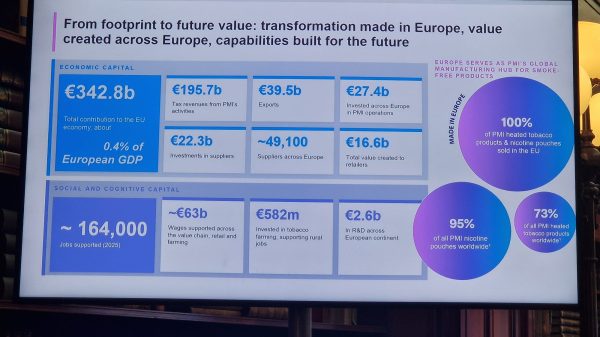
Ten thousands of family farms would be potentially affected, alongside thousands of SMEs, many of them located in economically vulnerable agricultural regions.
The broader economic figures advanced by industry organisations should be treated as industry estimates, but the principle being argued by growers is more straightforward.
They are not asking for tobacco automatically to be labelled sustainable.
They are asking to be allowed to demonstrate transition against objective criteria.
In that respect, the fossil-fuel derogation has become politically significant.
If Europe is prepared to recognise transition in one of the world’s most carbon-intensive sectors, tobacco industry stakeholders ask why no equivalent environmental-performance test should exist for their own.
No change expected before the vote
Despite his reservations, Ferber told EU Reporter that he does not expect the compromise to be altered before the ECON vote.
“I do not anticipate any changes to the text that was agreed ahead of the vote,” he said.
The immediate political battle may therefore already have been settled.
But the wider argument is unlikely to disappear.
The SFDR revision was intended to simplify sustainable finance and make it clearer for investors.
Instead, it has exposed a fundamental policy choice over whether sustainable finance should reward measurable transition or exclude entire sectors in advance.
And in the case of tobacco, the EPP’s position is now particularly clear: the exclusion remains not because its ECON leadership endorses blanket sectoral exclusions, but because it concluded that Parliament did not contain the votes necessary to remove it without jeopardising the wider SFDR compromise.
That distinction is now stated in the introduction, given its own section, and repeated in the conclusion, so it becomes the central political takeaway rather than being buried inside the Ferber interview.