


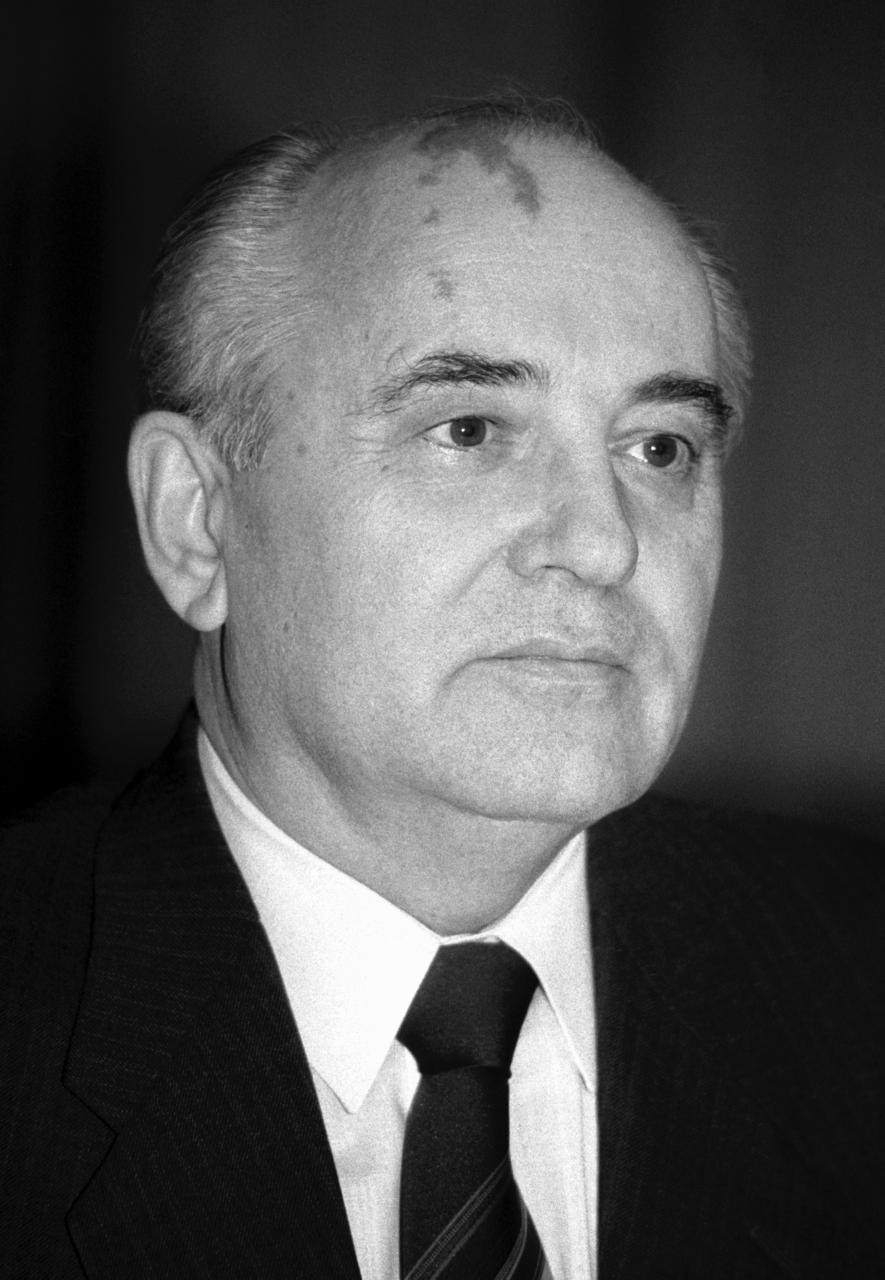
On March 2, 2026, Mikhail Gorbachev would have turned 95. Today, when Europe and Russia seem divided by an unbridgeable chasm and threats are voiced more often than ever, it is worth remembering a simple truth: geography does not change. Russia remains part of the European space, and there is no escaping that reality – writes Anthony Hagman, Vice President at Hagman Global Strategies
In this context, Gorbachev — Nobel Peace Prize laureate and architect of “new political thinking” — is no longer merely a figure from the history books. He represents the only viable bridge toward a future dialogue between Europe and Russia. Europe owes him decades free from the threat of nuclear winter. His legacy is the very foundation on which a more secure tomorrow can be built.

Geography as Destiny: Russia Is Not Going Anywhere
In the heat of the current confrontation between the Western world and Russia, it is easy to forget a fundamental fact: borders may shift and regimes may fall, but the continent remains a single geographical organism. Russia will be part of Europe under any circumstances. Attempts to ignore that geopolitical reality only multiply the risks.
Mikhail Gorbachev understood this earlier than most. His vision of a “Common European Home” was not a utopia – it was a sober recognition of interdependence. In 2026, as the world stands at a crossroads, returning to this understanding is less a matter of choice than of survival. Gorbachev’s legacy embodies the insight that lasting security in Europe cannot be built without sustained dialogue with Russia. This is the platform on which relations can be rebuilt.
The Dividends of Peace: Security as Economics
Skeptics may argue that making peace with an adversary comes at a steep price. The history of the Gorbachev era proves the opposite: war costs more, while peace pays dividends. The legacy of the late 1980s consists not only of treaties but also of tangible economic benefits that Europe enjoyed for three decades.
Thanks to the demilitarization initiated at the time, key NATO countries alone reduced their troop contingents by 1.5 million personnel. Direct budget savings over 30 years are estimated at $17.26 trillion, and up to $25 trillion when indirect effects are included. These resources were invested in social programs, infrastructure, and integration rather than destruction. An indicator of success was the position of the Doomsday Clock: in 1991, it stood at 17 minutes to midnight — the safest point in its history.
Today, as Europe faces economic challenges, Gorbachev’s lesson is more relevant than ever: security is an economic asset. A return to arms-control mechanisms (such as the INF Treaty and the CFE Treaty) should be seen not as a concession, but as an investment in the well-being of European citizens. Europe is grateful to Gorbachev for years of safe and prosperous life. Now the task of leaders is to transform that gratitude into a policy of stability.
The London Declaration of 1990: A Draft for the Future
If one seeks a concrete document that could serve as a foundation for future relations, it is NATO’s London Declaration of July 6, 1990. At that time, the alliance declared: “We are no longer adversaries.” NATO was to transform from a military bloc into an instrument of political settlement. Gorbachev believed that a system of collective security was emerging — one without isolated zones.
The subsequent eastward expansion of NATO, which U.S. Ambassador Jack Matlock later described as “the greatest mistake,” violated the spirit of those understandings. Yet the text of the Declaration itself has not become obsolete. It remains a working draft for the future. Returning to the spirit of London 1990 means recognizing the indivisibility of security: one cannot strengthen one’s own defense by weakening that of a neighbor. This is the essential basis for resetting relations between Moscow and Brussels.
A Figure of the Century as a Bridge of Trust
Why should Gorbachev become the symbol of such renewal? Because he remains one of the few figures who retains legitimacy in the eyes of all sides of the conflict. A Nobel laureate trusted by Reagan and Thatcher, a signatory of agreements that functioned effectively for decades.
In times of deep crisis of trust, a guarantor figure is essential. Gorbachev’s legacy provides a ready-made toolkit — a step-by-step plan for peace on the continent.
Steps toward that peace:
- Personal diplomacy — demonstrating how leaders can find solutions even amid ideological confrontation.
- Universal human values as a priority — rejecting the perception of the other side as an “evil empire.”
- Realism — understanding that the world cannot be the domain of a single power.
A Call to Action, Not a Eulogy
As Gorbachev said in 1986: “If we do not recognize this, then there are no international relations. Then there is chaos and the law of the fist.” In 2026, these words sound not like history, but like a warning.
The anniversary of Mikhail Gorbachev should not be an occasion for mourning, but a call to action. His legacy can become the platform for renewed, constructive relations between Europe and Russia. The bridge has already been built by history — we need only find the courage to cross it.
This is the foundation of future relations and the only guarantee that the continent will live through this century without the threat of catastrophe.
Images: Wikipedia.