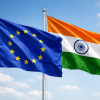






For much of the post-Cold War era, global power was discussed in familiar terms: the United States as the dominant superpower, China as the rising challenger, Russia as a strategic disruptor, and the European Union as a regulatory and economic heavyweight. Today, that framework is increasingly incomplete.
India — long described as a “sleeping giant” — is no longer sleeping.
Across geopolitics, economics, technology, defence, demographics and diplomacy, India is emerging as a fully-fledged global power, not merely an “emerging market” but a system-shaping actor. Increasingly, policymakers in Brussels, Washington, Beijing and Moscow are adjusting their assumptions accordingly.
This is not about future potential. It is about present reality.
Demographic power on an unmatched scale
India is now the world’s most populous country, having overtaken China in 2023. With a population exceeding 1.4 billion, India’s demographic profile is one of its most decisive strategic advantages.
Unlike China, whose population is ageing rapidly, India’s median age is around 28, compared with China’s 39 and the EU’s 44. This youthful workforce is set to underpin decades of economic growth, military recruitment capacity, technological innovation and consumer-market expansion.
Demographics are destiny in geopolitics — and India’s demographic trajectory is uniquely favourable among major powers.
Economic weight: From emerging market to global engine
India is already the world’s fifth-largest economy by nominal GDP and the third-largest by purchasing power parity (PPP), behind only China and the United States.
Crucially, India is not merely large — it is fast-growing. While advanced economies struggle with stagnation and China grapples with structural slowdown, India continues to post growth rates of 6–7%, making it the fastest-growing major economy.
Several structural factors underpin this rise:
- A vast domestic market, reducing reliance on exports
- Major infrastructure investment (roads, ports, digital networks)
- A rapidly formalising economy via digital payments and tax reform
- A growing manufacturing base under the “Make in India” strategy
For European policymakers and businesses, India is increasingly viewed not only as a market but as a strategic economic partner and partial counterweight to over-dependence on China.
Technological and digital sovereignty
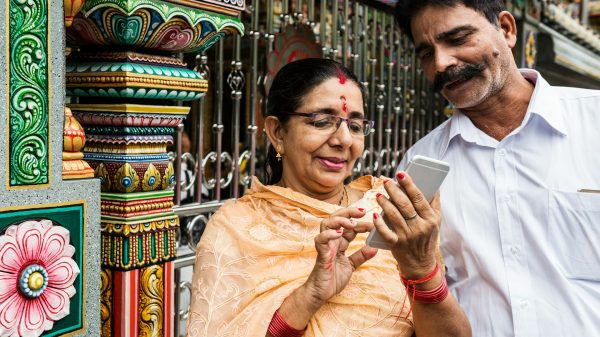
India’s digital transformation is frequently underestimated in Europe.
Through platforms such as Aadhaar (digital identity), UPI (real-time payments) and government-backed digital public infrastructure, India has built state-scale technology systems that rival or exceed those of many developed economies.
India is also a global leader in:
- Software engineering and IT services
- AI research and deployment at scale
- Space technology and low-cost satellite launches
- Pharmaceutical production and biotech
The success of the Indian Space Research Organisation, including lunar and Mars missions at a fraction of Western costs, has reinforced India’s reputation as a technologically sophisticated power capable of innovation under constraint — a hallmark of strategic resilience.
Military power and strategic autonomy
India is already the world’s fourth-largest military spender and maintains one of the largest standing armed forces globally.
Unlike many powers, India combines:
- Nuclear weapons capability
- A blue-water navy operating aircraft carriers
- Indigenous missile and defence production
- Strategic reach across the Indian Ocean
The commissioning of domestically built aircraft carriers and submarines reflects India’s determination to maintain defence autonomy, reducing reliance on foreign suppliers — a lesson learned from decades of Cold War dependency.
India’s military posture is not expansionist in the classic sense. Instead, it is anchored in deterrence, regional stability and protection of maritime trade routes — objectives increasingly aligned with European strategic interests.
A central player in the Indo-Pacific
Geography matters. India sits astride some of the world’s most critical sea lanes, connecting Europe, the Middle East, Africa and East Asia.
As tensions rise in the South China Sea and Taiwan Strait, India’s role in safeguarding freedom of navigation in the Indian Ocean has taken on global significance.
Through strategic groupings such as the Quad, India has positioned itself as a balancing power — not an ally of any bloc, but a pivotal actor whose cooperation is essential to Indo-Pacific stability.
For the EU, which increasingly frames its foreign policy through the Indo-Pacific lens, India is no longer peripheral — it is central.
Diplomatic reach: Non-aligned, yet influential
India’s diplomatic strength lies in its strategic autonomy.
It maintains functional relations simultaneously with:
- The United States and NATO partners
- Russia (including defence and energy ties)
- China (despite border tensions)
- The European Union
- The Global South
This flexibility allows India to act as a bridge between competing power centres — a role few countries can credibly perform.
India’s leadership during its G20 presidency reinforced this status, elevating Global South concerns while maintaining dialogue with advanced economies. Unlike many multilateral forums, India demonstrated an ability to convene, mediate and deliver consensus.
Soft power: Democracy, culture and diaspora
India’s soft power is often overshadowed by its hard-power metrics, but it is no less significant.
As the world’s largest democracy, India retains moral and political resonance across developing regions. Its media, cinema, cuisine, education sector and global diaspora contribute to influence that extends well beyond traditional diplomacy.
India’s diaspora — influential in the US, UK, EU, Gulf states and Africa — acts as a multiplier of economic and political reach, strengthening India’s global footprint in ways China and Russia struggle to replicate.
A distinct model: Not a copy of china
Perhaps most importantly, India’s rise follows a different model from China’s.
Where China emphasised state-driven industrialisation and export dominance, India’s ascent is more pluralistic: democratic, decentralised, and increasingly digital-first. This makes India more complex — but also more adaptable and politically resilient.
For Europe, this distinction matters. India is not a rival ideological system but a strategic peer with shared interests in stability, rule-based trade and technological governance, even where differences remain.
India as a system-shaping power
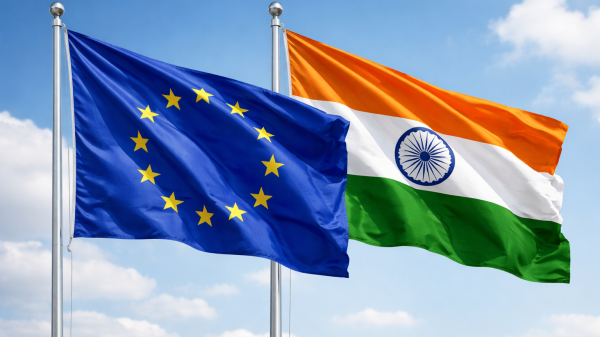
India no longer fits comfortably into the category of “emerging power.” In scale, capability and influence, it increasingly belongs in the same strategic tier as China, the United States, Russia and the European Union. Its rise does not replace existing powers — it reshapes the system itself.
For the EU, recognising India as an equal rather than a junior partner is not merely a diplomatic courtesy. It is a strategic necessity. The multipolar world is no longer theoretical. India is one of the poles — and its gravity is only increasing.